
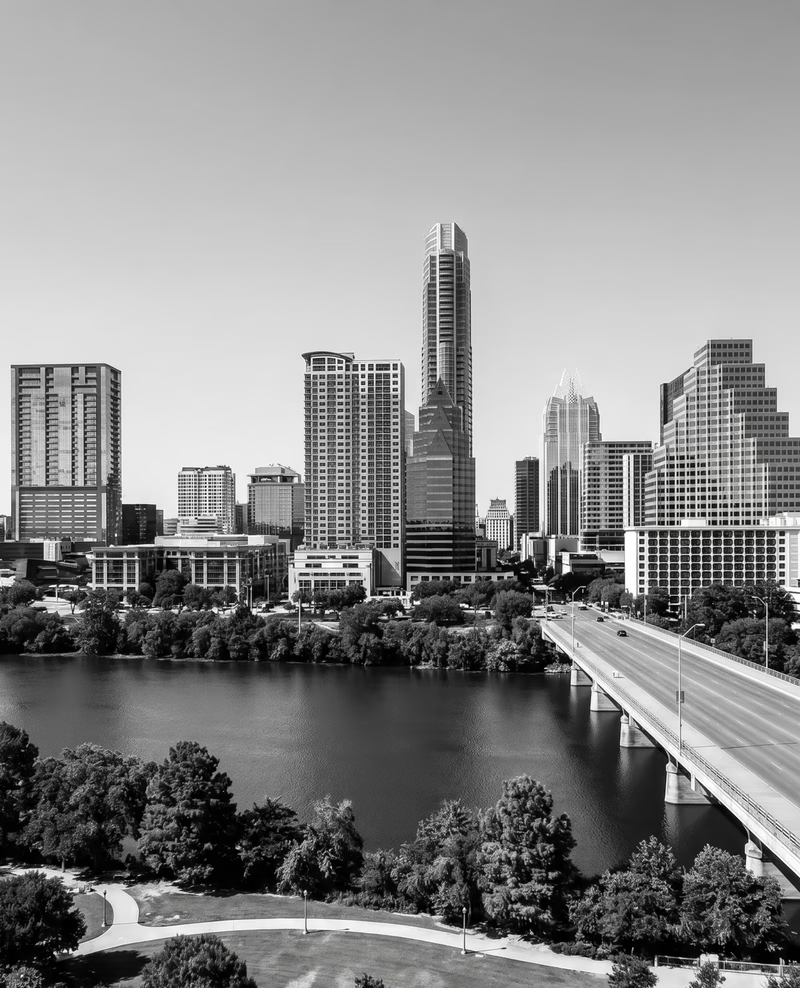
Nationally Recognized Property Claim & Personal Injury Trial Lawyers
Austin Property Damage Attorney
Austin property damage attorneys represent homeowners and businesses pursuing compensation for insurance claim disputes, catastrophic losses, and complex damage claims throughout Travis County. Moore Law Firm provides over 30 years of experience handling insurance claim disputes throughout Texas including Travis County and Central Texas regions, focusing exclusively on plaintiff-side property damage claims with a client-first approach and aggressive representation against major insurance carriers. Attorneys guide policyholders through the claims process, enforce coverage obligations, and pursue full compensation when insurers delay, deny, or underpay legitimate claims.
The benefits of hiring a property damage attorney in Austin are listed below:
- Increase settlement amounts by 40 to 60% on average through aggressive negotiation and comprehensive damage documentation
- Access independent contractors, engineers, and damage assessment professionals who identify hidden damage insurers overlook
- Protect yourself from insurance company pressure tactics, recorded statements, and lowball settlement offers
- Ensure compliance with Texas prompt payment laws and statute of limitations deadlines
- Receive professional interpretation of complex policy language, exclusions, and coverage provisions
- Eliminate upfront legal costs through contingency fee arrangements with payment only upon successful recovery
- Focus on recovery while attorneys handle all insurance communications, paperwork, and litigation procedures
Over A Thousand 5 Star Reviews from Texans Like You
Partnering with Moore Law Firm means working with attorneys who have over 30 years of experience fighting for clients across South Texas. Their clients consistently recognize the firm's dedication and determination to help every client recover fair compensation for their property damage claims.
Had good service from the start. I know claims and cases can take awhile but having the client app was beneficial to communicate and send documentation. Would definitely use their services again if needed to. Excellent team they have here. Got our claim settled after a good long fight.
This law firm is great in communicating with its clients. Sonia Flores did a great job in helping with starting our case. She explained the process thoroughly in a way to understand it. This is the second time they have helped us. Highly recommend them for your needs
I am very satisfied with Mr Moore. He has done great work on both my storm claim cases. Very knowledgeable and will fight for you! I would recommend this law firm to everyone. I am blessed that he is such a great attorney and is honest.
After our home in Pharr Texas experience damages from a storm and insurance did not want to pay, I called Moore Law Firm to get me my money! They fought for me and got me a settlement. Thank you
Moore Law Firm has excellent service, they have helped my parents on two occasions with insurance company that didn’t want to cover damages to their home. Highly recommend them!!!
I had a spectacular experience working with Moore Law Firm. Shout out to Cynthia who always does a great job at what she does. I truly recommend this law firm

Injured Or Dealing With Property Damage?
Advantages of Hiring a Property Damage Lawyer in Austin
Hiring a property damage lawyer in Austin provides significant advantages through accurate damage valuation, policy analysis, legal leverage, deadline compliance, litigation representation, and stress reduction.
- Damage Valuation
- Insurance Coverage Analysis
- Insurance Defense Strategy
- Deadline Compliance
- Litigation Representation
- Case Management
Helps You Recover Fair Compensation Through Accurate Damage Valuation
Property damage lawyers recover fair compensation through accurate damage valuation by hiring independent engineers identifying concealed structural damage, water intrusion, and future deterioration risks insurers overlook during storm, fire, and water damage assessments. Attorneys coordinate licensed contractors providing detailed repair scopes accounting for material costs, labor expenses, code upgrades, diminished property value, and additional living expenses.
Contact an attorney before accepting any settlement offer to ensure your valuation reflects actual repair costs.
Understands Complex Insurance Policies with Thorough Coverage Analysis
Property damage attorneys identify applicable provisions, endorsements, replacement cost versus actual cash value terms, matching requirements, and additional coverages insurers fail to apply. Policy interpretation recognizes ambiguities triggering doctrines favoring insureds when language permits multiple reasonable interpretations across homeowners, umbrella, and flood policies.
Schedule a free policy review to identify all coverage you are entitled to receive.
Protects You from Insurance Company Tactics Using Legal Leverage
Attorneys manage adjuster communications preventing recorded statements companies manipulate to deny hail, wind, and fire coverage. Attorneys counteract lowball settlement offers presenting comprehensive demand packages with engineering reports and contractor estimates. Legal leverage includes pursuing bad faith litigation when insurers violate prompt payment deadlines or refuse reasonable settlements without legitimate basis.
Call now to stop insurance company pressure tactics and protect your claim rights.
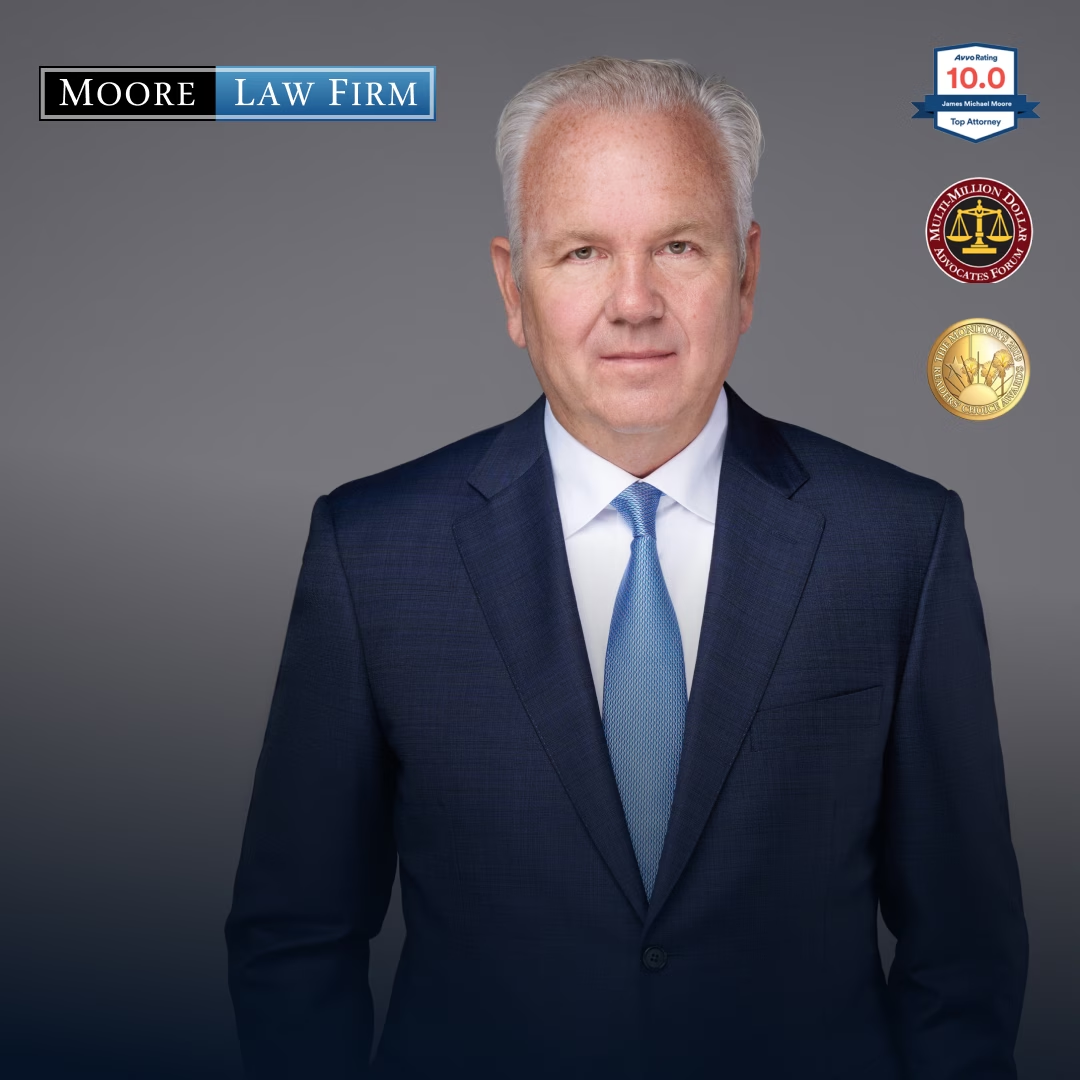
Ensures Legal Deadlines Are Met Through Statutory Compliance
Attorneys track the two-year statute of limitations under Texas Civil Practice and Remedies Code Section 16.003 preventing deadline expirations. Attorneys manage named storm claim requirements under Chapter 542A including mandatory 60-day pre-suit notice obligations before lawsuit filing preventing procedural dismissals. Deadline monitoring includes discovery rule applications when damage remains hidden and tolling provisions when defendants leave Texas during limitation periods.
Do not risk losing your claim. Contact an attorney immediately to preserve your legal rights.
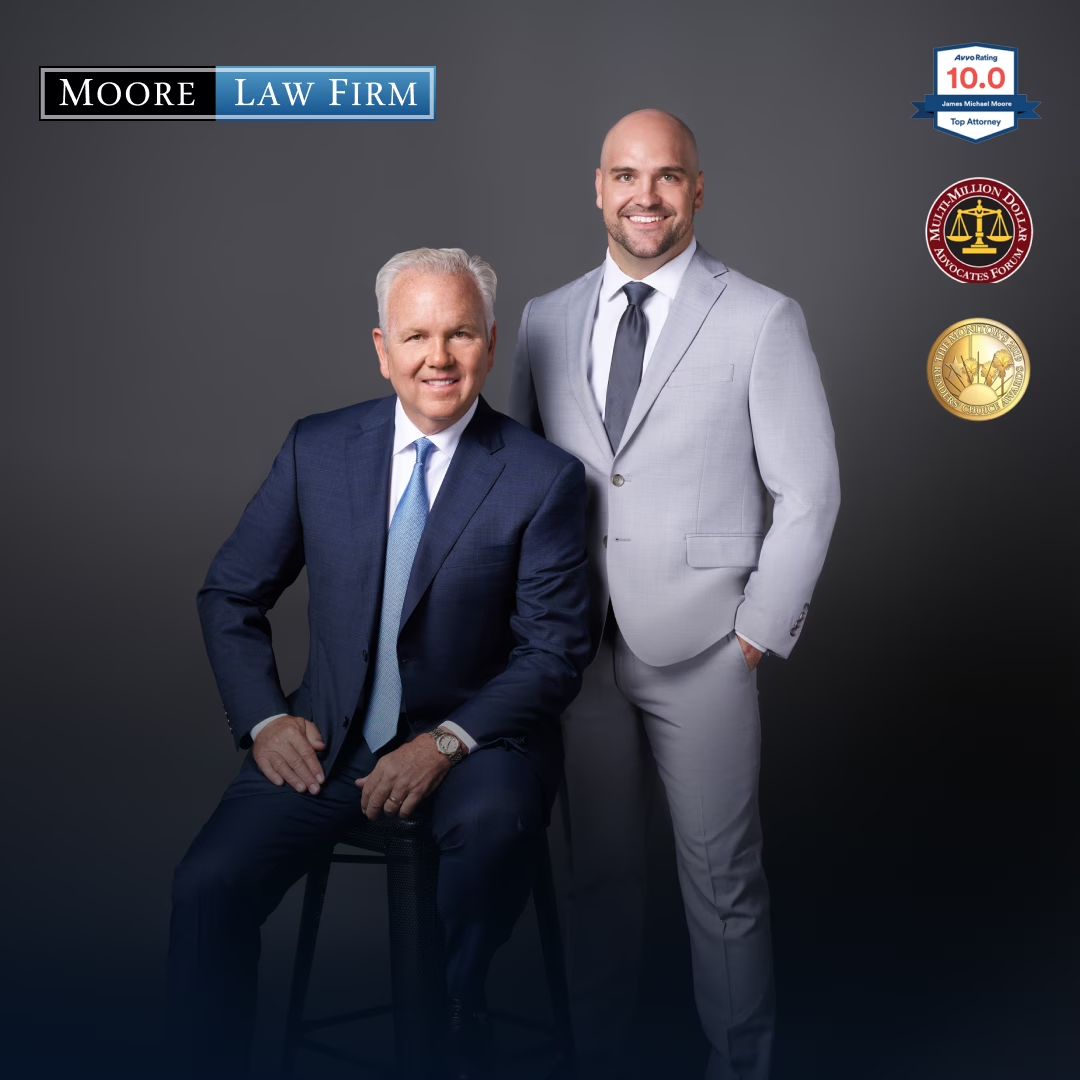
Represents You in Disputes and Lawsuits Through Litigation Experience
Michael Moore holds admission to all Texas state courts and four Federal District Courts with 27 years of plaintiff-side trial experience. Nick Moore’s prosecutor background provides courtroom skills applied to arson, vandalism, and theft-related property damage litigation, with representation including deposing insurance adjusters and obtaining admissions about claim handling deficiencies for fire, storm, water, and structural damage disputes.
Get experienced trial representation. Schedule your free consultation to discuss your case.
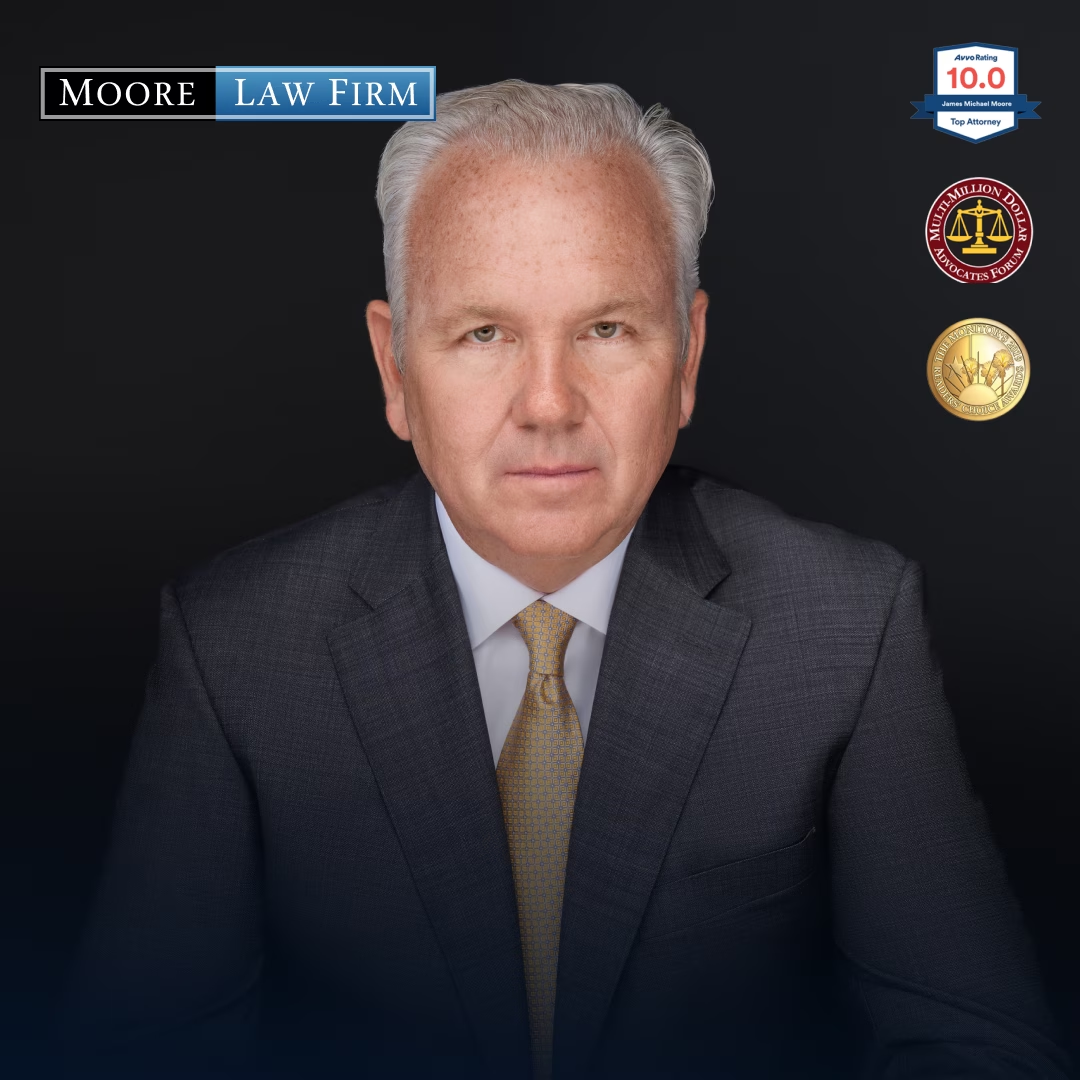
Reduces Stress and Saves Time Through Efficient Case Management
Attorneys handle all insurance communications, document submissions, and deadline tracking allowing clients to focus on recovery. Attorneys coordinate contractor evaluations, schedule engineering inspections, and obtain repair estimates eliminating property owner burden after catastrophic storm, fire, and water losses.
Let us handle everything. Call today for stress-free claim management at no upfront cost.
When to Hire a Property Damage Lawyer in Austin
Hiring a property damage lawyer in Austin becomes necessary when insurance disputes arise, damage exceeds simple repairs, or legal complexities threaten your recovery.
When Your Insurance Company Delays, Denies, or Underpays Your Claim
- Requesting excessive documentation to slow down claim processing
- Offering lowball settlements hoping for quick acceptance without negotiation
- Misinterpreting policy language to deny legitimate covered damages
- Delaying responses beyond Texas-required timeframes of 15 business days
- Claiming pre-existing damage to reduce settlement amounts artificially
- Conducting independent damage assessments with certified contractors and engineers
- Documenting all communication delays and bad faith insurance practices
- Negotiating aggressively based on policy language and Texas insurance regulations
- Filing formal complaints with the Texas Department of Insurance when necessary
- Pursuing litigation when insurers refuse reasonable settlement offers
- Average settlement increases of 40 to 60% with attorney involvement
- Protection against insurance company pressure tactics and improper denials
- No upfront costs with contingency fee arrangements
Texas Insurance Code Chapter 542 requires insurers to acknowledge claims within 15 business days and decide within 15 business days after receiving all requested documentation. Violations trigger 18% annual interest plus attorney fees. Attorneys document every deadline violation and communication gap to build a strong case for prompt payment plus additional damages.
Many Austin homeowners accept initial insurance offers without realizing they leave significant money unclaimed. Adjusters often overlook hidden damage, use depreciated values instead of replacement costs, or fail to account for code upgrade requirements. Independent attorneys bring in contractors and engineers who identify all repair needs including structural issues, mold potential, and building code compliance costs, typically revealing 30 to 50% more damage than initial adjuster estimates.
Property damage attorneys file lawsuits and take cases to trial when negotiation fails. For named storm claims, Texas Insurance Code Chapter 542A provides two years and one day from the date the insurer denies or underpays your claim to file a lawsuit — not from the storm date. Chapter 542A also requires mandatory 60-day written pre-suit notice to the insurer before filing. Juries in Travis County have shown willingness to hold insurers accountable for bad faith practices, and most cases settle before trial once insurers recognize your attorney’s commitment to pursuing full compensation.
When the Damage Is Severe or Total: Fire, Water, or Structural Collapse
- Document everything with photos and videos before cleanup begins
- Secure the property to prevent further damage or theft
- Notify your insurance company immediately but limit detailed statements
- Preserve all damaged items until insurance inspection is complete
- Contact a property damage attorney within 72 hours of the incident
- Full scope of structural damage including foundation and load-bearing systems
- Environmental hazards like asbestos, mold, or chemical contamination
- Loss of use compensation for temporary housing and relocation expenses
- Personal property inventory with accurate replacement valuations
- Additional living expenses including storage, meals, and transportation
- Code upgrade requirements exceeding original construction standards
- Demolition and debris removal costs often underestimated by insurers
- Landscaping and outdoor structure restoration expenses
- Emergency services costs like fire department fees or water extraction
- Diminished property value even after complete repairs
Insurance companies push actual cash value settlements accounting for depreciation. A property damage attorney argues for replacement cost coverage and ensures policy limits are properly applied. In cases where the property was not fully insured, attorneys may pursue claims against third parties responsible for the damage, such as contractors whose negligence caused a fire or municipalities whose drainage failures led to flooding.
Catastrophic losses often trigger homeowners, umbrella, and specialized coverages simultaneously. Attorneys coordinate claims across all applicable policies without letting insurers shift responsibility to each other, including identifying often-overlooked coverages like ordinance and law protection covering the cost of bringing rebuilt structures up to current building codes.
Severe property damage cases in Austin can take 12 to 24 months from loss to full settlement. Attorneys push for interim payments allowing reconstruction to begin while final settlement negotiations continue, balancing urgency with the patience needed to secure full compensation for all damages.
When There Is a Dispute Over Who Caused the Damage
- Tree falls from neighbor's property causing structural damage
- Water damage from shared walls in townhomes or condos
- Vandalism by identifiable individuals or criminal activity
- Construction damage from adjacent property development
- Fire or smoke damage originating from neighboring properties
- Property surveys establishing boundary lines and responsibility zones
- Maintenance records proving negligence or lack of reasonable care
- Witness statements from neighbors who observed the incident
- Professional analysis determining origin and cause of damage
- Police reports, security footage, or HOA violation records
- Your own insurance company through property damage coverage
- Neighbor's homeowner liability insurance for negligence claims
- HOA master policies for common area maintenance failures
- Contractor or developer insurance for construction-related damage
- Criminal restitution orders when vandalism or arson is involved
Attorneys establish negligence by proving duty of care, breach, causation, and damages. When multiple insurers deny responsibility and point fingers at each other, attorneys file claims against all potentially responsible parties simultaneously, preventing you from being caught in the middle while insurers engage in lengthy coverage disputes.
Property damage in Austin communities governed by homeowners associations presents unique challenges regarding maintenance responsibilities and insurance coverage. Attorneys review HOA bylaws, master policies, and maintenance agreements to determine whether the association or individual homeowners bear responsibility. When HOAs fail to maintain common areas properly, attorneys pursue claims against both the HOA and its insurance carrier.
When You Are Dealing with Complex Commercial Property Losses
- Business income calculations spanning multiple accounting periods
- Extra expense coverage for temporary relocation and operations
- Specialized equipment and inventory valuation disputes
- Tenant improvement and betterment coverage allocation
- Extended period of indemnity beyond physical restoration completion
- Analyzing profit and loss statements from previous comparable periods
- Projecting lost revenue based on seasonal trends and growth patterns
- Calculating ongoing fixed expenses during closure periods
- Documenting extra costs to minimize business disruption
- Proving causation between property damage and income loss
Commercial property valuations differ significantly from residential assessments in Austin. Insurance companies often undervalue specialized equipment, tenant improvements, or custom installations. Attorneys work with commercial appraisers, equipment dealers, and contractors who understand replacement costs for business-specific assets, including determining actual versus functional replacement cost when identical equipment is no longer manufactured.
Business interruption losses compound daily while property repairs progress. Attorneys document all financial impacts including lost contracts, customer attrition, employee retention costs, and market share losses extending beyond physical restoration. Many policies include extended period of indemnity provisions covering months after reopening that failure to claim leaves significant compensation unclaimed.
When You Need to Include Hidden or Long-Term Repair Costs
- Moisture intrusion behind walls leading to future mold growth
- Foundation settlement caused by water damage or soil erosion
- Electrical system damage from water exposure requiring rewiring
- HVAC system contamination requiring duct cleaning or replacement
- Plumbing corrosion from prolonged water exposure
- Code compliance upgrades mandated for substantial renovations
- Permit fees and inspection costs for major repairs
- Temporary protection measures like boarding or tarping
- Professional cleaning and deodorization services
- Landscaping restoration and site work expenses
- Adjusters conduct quick visual inspections without invasive testing
- Depreciation calculations reduce replacement cost artificially
- Local labor and material cost increases not reflected in estimates
- Scope limitations exclude related damage systems
- Failure to account for matching discontinued materials or finishes
Insurance company adjusters work for the insurer, not for you as the Austin property owner. Attorneys hire independent contractors, engineers, and inspectors who work solely in your interest. These professionals conduct thorough inspections including moisture testing, thermal imaging, and structural analysis that reveal hidden damage. When independent estimates exceed adjuster assessments by 30 to 50%, attorneys use this evidence to negotiate fair compensation or present compelling trial evidence.
When You Are Close to the Statute of Limitations Deadline
- Two years from date of damage for most property damage lawsuits
- Four years for breach of contract claims against insurers
- Two years and one day from claim denial for named storm disputes
- 60-day pre-suit notice required before filing named storm lawsuits
- Complete loss of right to file lawsuit for compensation
- Insurance companies gain absolute defense against your claims
- All leverage in negotiations disappears once lawsuit filing deadline expires
- Appeals courts rarely overturn statute of limitations dismissals
- Assuming ongoing negotiations with insurers extend the deadline
- Confusion about when the statute of limitations clock starts
- Delays in discovering full extent of property damage
- Waiting for insurance company decisions before seeking legal help
- Misunderstanding that claim filing differs from lawsuit filing
Texas courts recognize limited exceptions when property damage was not immediately discoverable through reasonable diligence. For example, if a contractor’s negligent work causes hidden foundation damage that does not manifest for three years, the statute of limitations may begin when you discover the damage. Courts interpret these exceptions narrowly, making it critical to consult an attorney as soon as you suspect damage rather than waiting for problems to worsen.
Attorneys balance negotiation opportunities against statute of limitations deadlines in Austin claims. Your attorney typically sends a formal demand letter 90 to 120 days before the limitations period expires, giving insurers a final opportunity to settle while preserving time to file suit if necessary. This approach maintains maximum pressure on insurance companies while protecting your legal rights.
When You Want a Professional to Handle All Insurer Communications
- Recorded statements to insurance adjusters
- Proof of loss forms requiring sworn accuracy
- Examinations under oath requested by insurers
- All insurer communications route through your attorney's office
- Professional documentation of every phone call, email, and letter
- Strategic responses that protect your interests and legal rights
- Timely submission of all required forms and documentation
- Proof of loss forms with detailed damage inventories
- Sworn statements in compliance with policy requirements
- Contractor estimates and repair invoices for completed work
- Correspondence tracking all claim submissions and responses
Insurance adjusters use recorded statements to establish admissions about damage causes, pre-existing conditions, and maintenance failures that insurers later cite as grounds for claim denial. Attorneys prepare you thoroughly before any recorded statement or allow you to decline statements not required by your policy. Many homeowners inadvertently harm their claims by describing damage as old or pre-existing when they simply mean it happened before they contacted the insurer.
Proof of loss forms require sworn accuracy under penalty of claim forfeiture. Attorneys prepare these documents using independent contractor estimates and engineering reports ensuring every damage component is captured correctly, while preserving rights to amend claims if additional damage is discovered later.
Insurance companies conduct investigations seeking grounds to deny claims in many Austin property damage cases. Attorneys advise clients on protecting privacy, respond to investigation requests strategically, and challenge insurer conclusions when investigations lead to claim denials, presenting contradictory evidence supporting your claim’s validity.
When You Suspect Insurance Bad Faith
- Failing to acknowledge or respond to your claim within 15 business days
- Requesting unnecessary documentation repeatedly to delay processing
- Denying claims without reasonable investigation or explanation
- Offering settlements far below obvious damage amounts
- Misrepresenting policy language or coverage provisions
- 18% annual interest on all delayed payments
- Attorney fees paid by the insurer for bad faith violations
- Additional penalties up to three times actual damages for knowing violations
- 15 business days to acknowledge claim receipt and begin investigation
- 15 business days after receiving all information to accept or deny claims
- 45-day extension allowed if insurer explains delay reasons in writing
- 5 business days to pay after accepting claim
An insurer commits bad faith when it denies a claim without conducting a reasonable investigation, ignores evidence supporting coverage, relies on biased adjuster opinions, or rushes to denial conclusions. Attorneys document investigation deficiencies through independent inspections, expert opinions, and evidence the insurer ignored or dismissed.
The Stowers doctrine requires Texas insurers to accept reasonable settlement demands within policy limits when liability is reasonably clear. Attorneys pursue extra-contractual damages when insurers’ delay tactics force you into foreclosure, bankruptcy, or emergency repairs at inflated costs, seeking full compensation including amounts beyond stated policy coverage.
Attorneys document every insurer’s deadline violation, communication gap, and unsupported denial to build a trial record establishing bad faith conduct justifying statutory penalties, attorney fees, and additional damages. Attorneys obtain the insurer’s complete claim file through discovery, often revealing internal communications where adjusters acknowledge coverage but deny claims anyway to save money.
When You Want to Reduce Stress and Let an Attorney Manage Negotiations
- All communications with insurance adjusters
- Gathering repair estimates and coordinating contractor access
- Tracking statutory deadlines and filing requirements
- Evaluating and responding to all settlement offers
- Displacement from your home disrupts family routines and stability
- Financial uncertainty about repair costs and compensation timeline
- Frustration dealing with unresponsive or adversarial insurance adjusters
- Anxiety about deadlines, paperwork, and legal requirements
- Overwhelm from managing contractors, repairs, and daily life simultaneously
- No need to research insurance law or policy interpretation
- No meetings with adjusters unless absolutely necessary
- No paperwork preparation or deadline tracking
- No contractor coordination for damage assessments
- No settlement calculation or negotiation preparation
Attorney representation frees property owners to focus exclusively on repair decisions, contractor selection, and temporary housing arrangements. Attorneys ensure insurance payments arrive on schedule to fund contractor work, removing the stress of financing repairs out-of-pocket while waiting for claim resolution.
Knowing that a trial-experienced attorney monitors all deadlines, manages all communications, and pursues every available recovery avenue provides property owners the confidence to focus on rebuilding their lives rather than fighting insurers.
Get Help With Your Property Damage Claim
Moore Law Firm offers free consultations for property damage victims across Texas. Call us today.
Types of Property Insurance Claim Compensations
The settlement amounts below reflect potential ranges from successful claims and negotiations. No fixed formula calculates individual awards since each claim involves distinct circumstances and variables. Recovery amounts depend on damage extent, insurance coverage, and claim-specific elements. These ranges demonstrate possible outcomes rather than guaranteed settlements.
-
Residential property damage encompasses structural harm, interior destruction, and livability impairment to homes throughout Austin. Texas Civil Practice and Remedies Code Section 16.003 establishes a two-year statute of limitations from damage date. The Insurance Information Institute reports residential claims average $12,000 nationally with Texas homeowners filing 275,000 property damage claims annually.
Common Causes- Severe weather including hail, wind, and tornadoes damaging roofs and structures
- Plumbing failures from burst pipes, water heater malfunctions, and appliance leaks
- Electrical system failures from faulty wiring or power surges creating fire risks
- Foundation settlement from soil movement and poor drainage damaging structural integrity
- Vandalism and break-ins during vacancies resulting in intentional property destruction
Types of Damage Covered- Structural repairs to foundation, framing, walls, and roof systems under dwelling provisions
- Interior damage including flooring, drywall, cabinets, and fixtures for replacement cost payment
- Contents damage for furniture, clothing, electronics, and personal property up to policy limits
- Additional living expenses during repairs including temporary housing, meals, and storage
- Code upgrade requirements to bring repairs into compliance with current building standards
Why You Need an Attorney- Insurance companies routinely undervalue residential damage by 30 to 50% through inadequate inspections
- Complex policy provisions regarding replacement cost and matching requirements demand professional interpretation
- Adjusters minimize structural damage by claiming pre-existing conditions rather than covered peril causation
- Bad faith claims become necessary when insurers violate Texas prompt payment deadlines
Property damage attorneys at Moore Law Firm conduct independent damage assessments, negotiate aggressively with insurance adjusters, challenge lowball settlement offers, pursue bad faith claims when insurers violate payment deadlines, and litigate cases through trial to recover fair compensation for your Residential Property Damage Claim.
Contact Us to Discuss Your Residential Property Damage Claim -
Commercial property damage involves structural harm, equipment losses, and business interruption affecting retail locations, office buildings, warehouses, and manufacturing facilities throughout Austin. Texas Civil Practice and Remedies Code establishes two-year property damage and four-year breach of contract statutes of limitations. Commercial claims average $75,000 nationally with severe losses exceeding $750,000 when multi-tenant buildings or specialized facilities suffer catastrophic damage.
Common Causes- Severe weather damaging commercial structures, signage, and parking facilities
- Fire from electrical failures, cooking equipment, or heating systems destroying buildings
- Water intrusion from plumbing failures, roof leaks, or HVAC condensation issues
- Vandalism and theft affecting storefronts, inventory, and business equipment
- Construction damage from adjacent developments causing structural or access problems
Types of Damage Covered- Building repairs to structural components, tenant improvements, and leasehold interests
- Business personal property including equipment, inventory, furniture, and fixtures
- Business income losses for lost profits and continuing expenses during closure
- Extra expenses for temporary relocation, expedited repairs, and emergency measures
- Civil authority coverage when government orders restrict property access after damage
Why You Need an Attorney- Business interruption calculations require accounting expertise insurers often dispute or minimize
- Commercial policies contain complex provisions regarding coinsurance, valuation methods, and coverage triggers
- Tenant improvement allocations between landlords and tenants create coverage disputes requiring legal resolution
- Insurance companies undervalue specialized equipment using inadequate replacement cost methodologies
- Extended period of indemnity provisions often remain unclaimed without attorney guidance
Property damage attorneys at Moore Law Firm coordinate with accountants and business valuation professionals, interpret complex commercial policy provisions, document full financial impact including customer losses, negotiate settlements covering complete business restoration, and pursue litigation when insurers refuse adequate compensation for your Commercial Property Damage Claim.
Contact Us to Discuss Your Commercial Property Damage Claim -
Vehicle property damage covers automobiles, motorcycles, recreational vehicles, and commercial trucks damaged in collisions, weather events, theft, or vandalism. Claims processing typically occurs faster than real property damage with insurers issuing payments within 30 to 45 days for straightforward collision claims. Settlement amounts range from minor fender repairs to total loss declarations for luxury vehicles.
Common Causes- Collision accidents on Interstate 35, MoPac Expressway, and Austin roadways
- Hail storms damaging vehicle exteriors, windshields, and body panels
- Theft and vandalism affecting vehicles in parking lots and residential areas
- Fire from mechanical failures, electrical shorts, or criminal acts destroying vehicles
- Flooding from heavy rainfall overwhelming drainage systems and submerging vehicles
Types of Damage Covered- Collision damage repairs to frame, body panels, mechanical systems, and safety features
- Comprehensive coverage for non-collision perils including theft, vandalism, weather, and fire
- Total loss settlements when repair costs exceed 70 to 75% of vehicle values
- Diminished value claims for reduced resale values after accident repairs
- Towing, storage, and rental reimbursement during repair periods
Why You Need an Attorney- Insurance companies use biased valuation databases underestimating actual market values
- Total loss determinations often ignore recent improvements, low mileage, or exceptional condition
- Diminished value calculations require automotive appraisal expertise insurers resist paying
- Rental reimbursement limitations leave vehicle owners without transportation during extended repairs
Property damage attorneys at Moore Law Firm obtain independent vehicle appraisals, challenge inadequate total loss valuations, pursue diminished value claims insurers routinely deny, negotiate settlements accounting for all loss components, and litigate when insurers refuse fair compensation for your Vehicle Property Damage Claim.
Contact Us to Discuss Your Vehicle Property Damage Claim -
Personal property damage involves destruction or harm to contents including furniture, electronics, clothing, jewelry, and household items requiring replacement cost or actual cash value compensation. Special limits apply to high-value items including jewelry, artwork, and collectibles requiring scheduled endorsements for adequate protection. Settlement amounts vary based on property value and quantity with modest contents claims averaging $3,000 while extensive losses reach $75,000.
Common Causes- Fire destroying clothing, furniture, electronics, and personal belongings
- Water damage from plumbing failures ruining flooring, furniture, and stored items
- Theft during burglaries removing jewelry, electronics, and valuable possessions
- Storm damage from roof leaks or window failures damaging interior contents
- Mold contamination requiring disposal of clothing, furniture, and household goods
Types of Damage Covered- Furniture and household goods including sofas, beds, tables, and decorative items
- Electronics and appliances including televisions, computers, kitchen equipment, and tools
- Clothing and personal items with coverage subject to policy limits and depreciation
- Jewelry, artwork, and collectibles up to special sublimits or scheduled endorsements
- Business property in residences subject to limited coverage requiring separate policies
Why You Need an Attorney- Insurance companies apply excessive depreciation reducing replacement cost to inadequate actual cash value
- Contents inventories demand detailed documentation policyholders often lack without attorney assistance
- Special limits for jewelry and valuables create coverage gaps requiring aggressive negotiation
- Matching provisions for partial losses remain unenforced without attorney advocacy
Property damage attorneys at Moore Law Firm help compile comprehensive contents inventories, challenge unreasonable depreciation calculations, enforce matching provisions for partial losses, negotiate settlements for high-value items, and pursue litigation when insurers deny legitimate contents claims.
Contact Us to Discuss Your Personal Property Damage Claim -
Water damage encompasses harm from burst pipes, plumbing failures, roof leaks, appliance malfunctions, and weather-related water intrusion requiring immediate mitigation and comprehensive restoration. Coverage varies between sudden accidental water damage from pipe bursts versus gradual seepage or flood damage often excluded from standard policies. Settlement amounts range from modest pipe leak repairs to extensive flooding requiring complete restoration.
Common Causes- Burst pipes from winter freezes, age deterioration, or excessive water pressure
- Roof leaks from storm damage, missing shingles, or flashing failures
- Plumbing failures from corroded pipes, faulty connections, or fixture malfunctions
- Appliance malfunctions from water heaters, washing machines, or dishwashers
- HVAC condensation or drain line blockages causing interior water accumulation
Types of Damage Covered- Emergency water extraction and structural drying to prevent additional damage
- Flooring replacement for hardwood, carpet, tile, and subfloor materials damaged by moisture
- Drywall and insulation removal and replacement after water saturation
- Mold remediation when water intrusion creates fungal growth requiring specialized treatment
- Contents restoration or replacement for furniture and belongings damaged by water
Why You Need an Attorney- Insurance companies deny water damage claims alleging maintenance failures or gradual damage exclusions
- Mold coverage disputes arise when insurers claim fungus resulted from maintenance rather than covered peril
- Causation analysis requires expert testimony distinguishing sudden accidents from gradual deterioration
- Additional living expenses during extensive water remediation often remain unclaimed without attorney guidance
Property damage attorneys at Moore Law Firm coordinate emergency mitigation preventing additional damage, hire water damage experts establishing covered peril causation, challenge insurer gradual damage allegations, document complete restoration costs including mold remediation, and litigate when insurers deny legitimate water damage claims.
Contact Us to Discuss Your Water Damage Claim -
Fire and smoke damage represents catastrophic property losses requiring extensive restoration or complete reconstruction after flames and combustion byproducts destroy structures and contents. Total loss fires generate highest settlement amounts approaching policy limits when structures suffer complete destruction.
Common Causes- Cooking accidents from unattended stoves, grease fires, and appliance malfunctions
- Electrical failures from faulty wiring, overloaded circuits, or defective equipment
- Heating equipment malfunctions from furnaces, space heaters, or fireplaces
- Smoking materials igniting furniture, bedding, or combustible materials
- Intentional arson requiring criminal investigation and insurance fraud examination
Types of Damage Covered- Structural repairs to fire-damaged framing, roofing, walls, and foundation components
- Smoke damage remediation including cleaning, sealing, and replacement of contaminated materials
- Contents replacement for items destroyed by flames or smoke contamination
- Additional living expenses for temporary housing during extended reconstruction periods
- Debris removal and demolition costs when structures require complete replacement
Why You Need an Attorney- Fire cause determinations affect coverage with insurers investigating arson suspicions aggressively
- Smoke damage extent disputes arise when insurers minimize contamination requiring replacement
- Total loss valuations create disagreements over replacement cost versus actual cash value settlements
- Code upgrade costs often exceed original construction requiring attorney enforcement of ordinance coverage
- Additional living expense calculations span extended periods insurers attempt to limit unreasonably
Property damage attorneys at Moore Law Firm retain fire investigation experts establishing accidental origins, document complete smoke contamination extent, negotiate total loss settlements ensuring adequate reconstruction funding, enforce code upgrade coverage provisions, and litigate when insurers deny or undervalue catastrophic fire losses.
Contact Us to Discuss Your Fire and Smoke Damage Claim -
Storm and wind damage includes harm from severe thunderstorms, tornadoes, hail events, and high winds causing roof destruction, window breakage, siding damage, and tree falls throughout Austin. Named storm claims under Texas Insurance Code Chapter 542A receive special treatment with two years plus one day statute of limitations from denial date. Settlement amounts vary from minor shingle repairs to complete roof replacements and structural repairs approaching $250,000.
Common Causes- Severe thunderstorms with straight-line winds exceeding 60 mph damaging structures
- Tornadoes creating catastrophic destruction requiring complete reconstruction
- Hail events damaging roofing materials, siding, windows, and outdoor equipment
- Windstorms tearing off roof sections, breaking windows, and toppling trees
- Hurricane remnants bringing tropical storm force winds to Central Texas region
Types of Damage Covered- Roof repairs including shingle replacement, decking repair, and structural restoration
- Window and door replacement when wind pressure or debris causes breakage
- Siding and exterior damage repairs restoring weather protection and appearance
- Tree removal and structural repairs when fallen trees damage buildings
- Fence, shed, and outbuilding repairs when wind destroys accessory structures
Why You Need an Attorney- Insurance companies dispute storm damage claiming pre-existing wear rather than new wind harm
- Hail damage requires specialized inspection techniques insurers avoid to minimize claim values
- Matching provisions for partial roof damage often go unenforced without attorney advocacy
- Chapter 542A deadlines and pre-suit notice requirements demand attorney management
Property damage attorneys at Moore Law Firm hire independent roofing contractors confirming storm damage, challenge insurer pre-existing condition allegations, enforce matching provisions requiring complete roof replacement, manage Chapter 542A notice requirements, and litigate when insurers deny legitimate storm claims.
Contact Us to Discuss Your Storm and Wind Damage Claim -
Vandalism and theft damage involves intentional property destruction, graffiti, broken windows, stolen items, and malicious damage requiring repair and replacement compensation throughout Austin properties. Coverage typically includes vandalism and theft as named perils under homeowners policies with deductibles applying.
Common Causes- Burglaries resulting in forced entry damage, stolen valuables, and interior destruction
- Graffiti vandalism on exterior walls, fences, and garage doors
- Malicious property destruction from broken windows, damaged fixtures, and defaced surfaces
- Copper theft from HVAC systems, plumbing, and electrical components
- Vacant property vandalism when unoccupied homes attract criminal activity
Types of Damage Covered- Repair of forced entry damage to doors, windows, locks, and security systems
- Replacement of stolen personal property including electronics, jewelry, and valuables
- Graffiti removal and surface restoration to original appearance
- Interior damage repairs from malicious destruction during break-ins
- Security improvements to prevent future incidents when reasonably necessary
Why You Need an Attorney- Insurance companies require police reports and extensive documentation before processing claims
- Stolen property valuations demand proof of ownership and value insurers scrutinize heavily
- Coverage disputes arise when insurers allege lack of forced entry evidence
- Vacant property exclusions may apply when homes remain unoccupied requiring attorney challenge
Attorneys document vandalism and theft with police reports and evidence, compile stolen property inventories with valuations, challenge coverage denials based on vacant property exclusions, negotiate settlements for complete restoration, and litigate when insurers refuse legitimate vandalism claims.
Contact Us to Discuss Your Vandalism and Theft Damage Claim -
Electrical or mechanical damage encompasses harm from power surges, HVAC failures, appliance malfunctions, and system breakdowns requiring equipment replacement and related property repairs throughout Austin. Coverage limitations often apply requiring policy review to determine whether sudden mechanical failures qualify as covered perils.
Common Causes- Power surges from lightning strikes or utility failures destroying electronics and appliances
- HVAC system failures from age, lack of maintenance, or component defects
- Electrical fires from faulty wiring, overloaded circuits, or defective equipment
- Appliance malfunctions causing water leaks, fires, or electrical damage
- Mechanical breakdowns of critical building systems requiring emergency replacement
Types of Damage Covered- Electrical system repairs including panel replacement, rewiring, and fixture restoration
- HVAC equipment replacement when sudden failures render systems inoperable
- Appliance replacement for sudden mechanical breakdowns covered under policies
- Consequential damage from mechanical failures causing fires or water intrusion
- Emergency repair costs to restore essential building systems and prevent additional damage
Why You Need an Attorney- Insurance companies claim mechanical breakdown exclusions apply to most equipment failures
- Gradual wear versus sudden failure determinations affect coverage requiring expert testimony
- Consequential damage from mechanical failures often goes unclaimed without attorney guidance
- Age and maintenance history become bases for coverage denials requiring legal challenge
Property damage attorneys at Moore Law Firm retain electrical and mechanical experts establishing sudden failure causation, challenge insurer maintenance exclusion allegations, document consequential damage from system failures, negotiate settlements for complete system replacement, and litigate when insurers deny legitimate mechanical damage claims.
Contact Us to Discuss Your Electrical or Mechanical Damage Claim -
Tenant-caused property damage involves harm renters inflict on rental properties beyond normal wear and tear requiring landlord compensation through security deposits, insurance claims, or legal action throughout Austin. Insurance coverage applies when damage exceeds normal wear rising to vandalism or negligent conduct levels.
Common Causes- Intentional damage from angry tenants destroying property before eviction
- Negligent conduct causing fires, water damage, or structural harm
- Pet damage exceeding normal wear including flooring destruction and wall damage
- Unauthorized modifications creating code violations or structural concerns
- Neglect allowing minor issues to escalate into major damage requiring extensive repairs
Types of Damage Covered- Interior repairs to flooring, walls, fixtures, and cabinets damaged by tenants
- Smoke and odor remediation from unauthorized smoking or cooking incidents
- Plumbing repairs from tenant negligence causing water damage
- Appliance replacement when tenant misuse destroys equipment
- Exterior damage from tenant vehicles, storage, or maintenance failures
Why You Need an Attorney- Insurance companies dispute tenant damage claims when damage appears maintenance-related rather than negligent
- Security deposit limitations leave landlords seeking additional compensation through insurance or lawsuits
- Intentional damage versus negligent conduct determinations affect coverage and recovery options
- Tenant collection judgments require legal proceedings when security deposits prove insufficient
Property damage attorneys at Moore Law Firm document tenant damage through inspection reports and photographs, pursue insurance claims when damage exceeds normal wear, file lawsuits against tenants for uninsured losses, coordinate security deposit proceedings, and litigate when insurers deny legitimate tenant damage claims.
Contact Us Today to Schedule a Free Consultation -
Construction or contractor-related damage encompasses harm from defective workmanship, negligent construction practices, code violations, and contractor errors causing property damage throughout Austin requiring correction and compensation. Liability claims against contractors, subcontractors, and construction companies provide recovery sources separate from insurance policies. Settlement amounts vary from minor repair corrections to extensive reconstruction approaching $300,000.
Common Causes- Defective workmanship from improper installation of roofing, plumbing, or electrical systems
- Construction defects in new home builds causing structural, water intrusion, or foundation problems
- Contractor negligence during renovations damaging existing structures or systems
- Code violations requiring correction to obtain permits or pass inspections
- Abandoned projects leaving properties exposed to weather and additional damage
Types of Damage Covered- Structural repairs correcting foundation defects, framing errors, or load-bearing failures
- Water intrusion damage from improper flashing, waterproofing, or drainage installation
- Electrical and plumbing defects requiring complete system replacement
- Code compliance corrections bringing work into conformity with building standards
- Demolition and replacement of defective materials and workmanship
Why You Need an Attorney- Contractor liability claims require proving duty, breach, causation, and damages through expert testimony
- Construction defect statutes of limitations involve complex accrual rules demanding attorney analysis
- Multiple responsible parties including general contractors, subcontractors, and suppliers complicate recovery
- Insurance coverage disputes arise when policies exclude construction defects or contractor work
Attorneys at Moore Law Firm in the Austin area hire construction experts documenting defective work, establish contractor negligence through industry standard analysis, pursue claims against all responsible parties, enforce warranty provisions, and litigate construction defect cases through trial to recover fair compensation for your Construction or Contractor-Related Damage Claim.
Contact Us Today to Discuss Your Construction or Contractor-Related Damage
The Most Common Property Damage Claims
Property damage claims in Austin most frequently involve water damage from plumbing failures, fire and smoke damage from electrical failures, storm and wind damage from severe weather, and hail damage from Texas storms causing roof and structural destruction requiring immediate insurance claim filing.
-
Common Symptoms
- Warped or stained floors and ceilings throughout affected areas
- Visible water stains on walls indicating active or recent intrusion
- Musty odors indicating moisture presence and potential mold development
- Peeling paint or wallpaper from moisture saturation damage
- Soft or spongy drywall demonstrating structural compromise
- Standing water or dampness requiring immediate extraction and drying
Settlement Value Factors
- Source of water determining clean versus contaminated classification
- Speed of water mitigation response affecting damage extent
- Extent of structural damage requiring repair or replacement
- Presence of mold growth necessitating remediation expenses
- Duration of exposure before discovery and mitigation
- Documentation quality and timeliness supporting claim validity
Required Documentation
- Water mitigation company reports detailing extraction and drying processes
- Photographs of damage progression from discovery through completion
- Plumber or contractor estimates identifying repair costs and methods
- Moisture readings and inspections establishing damage extent
- Repair invoices and receipts documenting mitigation and restoration
- Insurance adjuster communications tracking claim processing timeline
Claim Impact
Water damage claims face challenges when insurers argue damage was gradual or pre-existing rather than sudden. Documentation showing sudden event onset and immediate mitigation response increases settlement value substantially. Professional water extraction records, moisture testing reports, and contractor statements establish covered peril occurrence.
Defense Strategy
Insurance companies often deny claims citing maintenance neglect or gradual deterioration exclusions. Thorough documentation of sudden event occurrence, immediate mitigation efforts, and professional testimony about water damage timelines prove critical. Plumber reports identifying specific failure points counter insurer arguments attributing damage to maintenance failures.
Legal Considerations
Texas law distinguishes sudden water damage receiving coverage from gradual seepage facing exclusion. When third parties caused damage through negligence, property owners may pursue recovery beyond insurance policy limits through liability claims.
Did you sustain water damage that resulted in mold growth or structural deterioration?
Don't let insurance companies minimize your claim. Our attorneys know how to pursue fair compensation.
-
Common Symptoms
- Charred or burned structural components requiring replacement
- Smoke stains on walls, ceilings, and surfaces throughout property
- Strong smoke odors permeating building materials and contents
- Soot accumulation on surfaces and in HVAC systems
- Water damage from firefighting sprinkler systems and hoses
- Heat damage to adjacent areas without direct fire contact
Settlement Value Factors
- Fire origin and cause determination affecting coverage
- Extent of structural damage requiring reconstruction
- Smoke contamination throughout property requiring remediation
- Water damage from firefighting efforts needing restoration
- Total loss versus partial damage affecting replacement cost
- Additional living expenses during extended reconstruction periods
Required Documentation
- Fire department reports documenting fire date, origin, and cause
- Fire investigator reports if arson suspected or coverage disputed
- Contractor estimates for complete structural reconstruction
- Smoke remediation specialist assessments and cleaning costs
- Contents inventory with values for destroyed personal property
- Temporary housing receipts throughout reconstruction period
Claim Impact
Insurance companies scrutinize fire origin seeking grounds for denial based on arson suspicions or excluded maintenance failures. Independent fire investigation reports establishing accidental causation overcome insurer denial attempts while comprehensive damage documentation supports full reconstruction cost recovery.
Defense Strategy
Independent fire investigators providing credible causation analysis counter insurer attempts to deny claims. Smoke damage valuation disputes arise when adjusters minimize contamination extent requiring complete HVAC cleaning and surface remediation rather than partial cleanup.
Legal Considerations
Texas law requires insurers to prove arson or intentional causation to deny fire claims rather than merely raising suspicion. Smoke damage throughout structures receives coverage even when fire damage remains localized. Code upgrade requirements significantly increase reconstruction costs qualifying for ordinance and law coverage when available.
Did you sustain fire and smoke damage that requires complete property restoration?
Don't let insurance companies minimize your claim. Our attorneys know how to pursue fair compensation.
-
Common Symptoms
- Missing or damaged roof shingles exposing underlayment or decking
- Torn or punctured siding creating weather penetration points
- Broken windows and damaged door frames from wind pressure
- Downed trees or large branches causing structural impact damage
- Damaged gutters, downspouts, and exterior trim components
- Interior water intrusion from compromised building envelope
Settlement Value Factors
- Storm severity and documented weather conditions during event
- Extent of roof and structural damage requiring replacement
- Immediate mitigation costs for tarping and emergency repairs
- Matching requirements for partial roof or siding replacement
- Code upgrade costs when repairs trigger compliance requirements
- Additional damage from weather exposure before repairs complete
Required Documentation
- Weather service reports confirming storm date and severity
- Contractor inspections documenting wind and impact damage
- Photographs showing damage immediately after storm occurrence
- Emergency repair invoices for tarping and temporary protection
- Roofing estimates detailing scope and replacement costs
- Insurance adjuster reports and correspondence tracking claim
Claim Impact
Storm damage claims face scrutiny when insurers claim pre-existing wear rather than new storm damage. Independent roofing inspections distinguishing fresh wind damage from prior deterioration strengthen claim positions. Matching provisions requiring complete roof replacement when partial damage cannot match existing materials significantly increase settlement values.
Defense Strategy
Insurance companies dispute storm claims by alleging damage resulted from maintenance neglect, age deterioration, or prior unreported events. Independent contractor assessments identifying storm-specific damage patterns counter these arguments. Meteorological reports confirming severe weather occurrence on claimed dates establish coverage trigger events.
Legal Considerations
Texas Insurance Code Chapter 542A governs named storm claims establishing two years plus one day statute of limitations from denial date rather than storm date. Mandatory 60-day pre-suit notice requirements apply before filing lawsuits. Matching provisions under Texas law require complete replacement when partial repairs create aesthetic or functional inconsistencies.
Did you sustain storm or wind damage that requires immediate mitigation to prevent further loss?
Don't let insurance companies minimize your claim. Our attorneys know how to pursue fair compensation.
-
Common Symptoms
- Bruised or cracked asphalt shingles showing hail impact points
- Dented metal roofing, flashing, vents, or gutters
- Cracked or broken roof tiles, skylights, or solar panels
- Dented vinyl or aluminum siding requiring replacement
- Damaged air conditioning units, outdoor equipment, or vehicles
- Granule loss on asphalt shingles reducing lifespan
Settlement Value Factors
- Hail size and storm intensity affecting damage severity
- Roof age and condition influencing replacement versus repair decision
- Number of hail strikes per square foot determining damage extent
- Matching requirements when partial replacement is impossible
- Additional components damaged including gutters, vents, and equipment
- Documentation quality proving hail occurrence and impact damage
Required Documentation
- Weather service hail reports confirming size and occurrence
- Roofing contractor inspections identifying hail strike patterns
- Photographs showing hail impact damage to multiple surfaces
- Aerial or drone imagery documenting widespread roof damage
- Manufacturer specifications regarding hail damage thresholds
- Insurance adjuster reports and engineering assessments
Claim Impact
Hail damage claims require proving hail strikes caused damage rather than normal wear or aging. Independent roofing contractors trained in hail damage identification provide credible damage assessments. Insurance companies deploy adjusters claiming insufficient damage or attributing wear to age rather than hail.
Defense Strategy
Insurance companies challenge hail claims by disputing whether damage resulted from hail or from normal aging processes. Independent roofing contractors identifying specific hail strike characteristics including bruising, fractures, and impact patterns counter these arguments. Meteorological confirmation of hail occurrence on specific dates establishes coverage trigger events.
Legal Considerations
Chapter 542A named storm provisions apply to hail damage claims establishing extended statute of limitations and pre-suit notice requirements. Matching provisions become critical when partial roof replacement cannot achieve aesthetic consistency with remaining sections. Adjusters often approve partial repairs while attorneys secure complete replacement through matching enforcement.
Did you sustain hail damage that requires immediate inspection before weather exposure obscures the evidence?
Don't let insurance companies minimize your claim. Our attorneys know how to pursue fair compensation.
-
Common Symptoms
- Forced entry damage to doors, windows, locks, or security systems
- Missing personal property including electronics, jewelry, or valuables
- Graffiti on exterior or interior surfaces requiring removal
- Intentional damage to fixtures, appliances, or structural components
- Ransacked interiors with contents disturbed or destroyed
- Evidence of unauthorized entry or criminal activity
Settlement Value Factors
- Value of stolen property based on replacement cost or actual cash value
- Extent of forced entry damage requiring repair or replacement
- Graffiti removal costs and surface restoration expenses
- Police report documentation establishing criminal activity occurrence
- Proof of ownership and value for stolen items
- Security system records evidencing break-in timing
Required Documentation
- Police reports documenting theft or vandalism occurrence and investigation
- Photographs showing forced entry damage and interior destruction
- Receipts, appraisals, or purchase records for stolen items
- Contents inventory listing missing property with descriptions and values
- Contractor estimates for repairing forced entry and vandalism damage
- Security footage if available showing criminal activity
Claim Impact
Theft and vandalism claims require substantial proof of criminal activity and property ownership. Insurance companies scrutinize claims for evidence of forced entry distinguishing covered theft from mysterious disappearance. Detailed contents inventories with supporting documentation increase settlement values significantly.
Defense Strategy
Insurance companies challenge theft claims by questioning whether forced entry occurred or suggesting inside job scenarios. Comprehensive police reports documenting investigation findings counter insurer skepticism. Photographic evidence of forced entry damage and security system records establish covered peril occurrence.
Legal Considerations
Texas law requires proof of actual theft or vandalism occurrence rather than mere property disappearance. Vacant property exclusions may apply when homes remain unoccupied requiring attorney challenge. Criminal restitution orders provide additional recovery options beyond insurance when perpetrators are identified and convicted.
Did you sustain theft or vandalism that requires a police report and criminal evidence to pursue compensation?
Don't let insurance companies minimize your claim. Our attorneys know how to pursue fair compensation.
-
Common Symptoms
- Water stains on ceilings or walls indicating active roof leaks
- Missing, cracked, or curling shingles exposing underlayment
- Sagging roof sections indicating structural deterioration
- Granule loss on asphalt shingles reducing weather protection
- Damaged flashing around chimneys, vents, or roof penetrations
- Interior mold or moisture damage from chronic leak conditions
Settlement Value Factors
- Cause of damage determining coverage versus excluded wear
- Roof age affecting replacement versus repair decision
- Extent of interior water damage from leak intrusion
- Matching requirements when partial replacement is impossible
- Code upgrade costs when repairs trigger compliance requirements
- Documentation establishing covered peril versus maintenance failure
Required Documentation
- Roofing contractor inspections identifying damage cause and extent
- Photographs showing roof condition before and after damage
- Interior damage documentation from water intrusion
- Moisture testing results establishing leak sources
- Installation records and prior maintenance history
- Insurance adjuster reports and engineering assessments
Claim Impact
Roof damage claims require proving damage resulted from covered perils rather than normal wear or maintenance neglect. Insurance companies frequently deny claims alleging age deterioration or improper maintenance caused failures. Independent roofing inspections distinguishing storm damage from wear strengthen claim positions.
Defense Strategy
Insurance companies challenge roof claims by attributing damage to age, wear, or maintenance failures rather than covered perils. Independent contractor assessments identifying specific storm damage, installation defects, or covered peril causation counter these arguments. Manufacturer defect claims provide alternative recovery when materials fail prematurely.
Legal Considerations
Texas distinguishes between sudden roof damage from storms receiving coverage and gradual deterioration facing exclusion. Matching provisions require insurers to replace entire roofs when partial repairs cannot achieve aesthetic or functional consistency. Code upgrade requirements significantly increase replacement costs qualifying for ordinance and law coverage.
Did you sustain roof damage that was caused by storms, defective installation, or material failure?
Don't let insurance companies minimize your claim. Our attorneys know how to pursue fair compensation.
-
Common Symptoms
- Non-functioning electrical outlets, switches, or fixtures
- Burned or charred wiring, panels, or electrical components
- Tripped breakers or blown fuses indicating electrical problems
- Damaged appliances, electronics, or HVAC systems from power surges
- Smoke odors or scorch marks indicating electrical overheating
- Complete power loss or intermittent electrical failures
Settlement Value Factors
- Cause of electrical damage affecting coverage determination
- Extent of wiring replacement or electrical panel upgrades required
- Value of destroyed appliances and electronic equipment
- Fire damage from electrical failures requiring additional restoration
- Code upgrade costs when repairs trigger compliance requirements
- Documentation establishing covered peril versus maintenance neglect
Required Documentation
- Electrician inspections identifying damage cause and repair scope
- Photographs showing damaged electrical components and appliances
- Power company records documenting surge events or outages
- Appliance receipts and valuations for destroyed equipment
- Fire department reports if electrical fire occurred
- Insurance adjuster reports and electrical engineering assessments
Claim Impact
Electrical damage claims require proving damage resulted from covered perils like lightning or power surges rather than maintenance neglect. Insurance companies scrutinize electrical fire claims seeking grounds for denial based on improper maintenance or code violations. Independent electrician reports establishing sudden failure causation strengthen claim positions.
Defense Strategy
Insurance companies challenge electrical claims by alleging damage resulted from improper maintenance, outdated wiring, or code violations rather than covered perils. Independent electrician assessments identifying specific surge damage, lightning strike evidence, or covered peril causation counter these arguments. Utility company surge event records establish coverage triggers.
Legal Considerations
Texas law covers sudden electrical damage from lightning or power surges while excluding gradual deterioration from aging systems. Code upgrade requirements significantly increase repair costs qualifying for ordinance and law coverage when available.
Did you sustain electrical damage that was caused by power surges, lightning strikes, or faulty wiring?
Don't let insurance companies minimize your claim. Our attorneys know how to pursue fair compensation.
-
Common Symptoms
- Structural damage to walls, foundations, or support columns
- Broken windows, doors, or garage structures from vehicle impact
- Damaged fences, gates, or perimeter barriers
- Landscaping destruction including trees, shrubs, or hardscaping
- Utility damage to gas lines, water pipes, or electrical service
- Compromised building envelope creating weather exposure
Settlement Value Factors
- Extent of structural damage requiring repair or replacement
- Liability determination affecting recovery from at-fault parties
- Vehicle insurance coverage limits on responsible driver's policy
- Property insurance deductible and coverage for collision damage
- Additional damage from weather exposure before repairs complete
- Documentation establishing fault and damage causation
Required Documentation
- Police accident reports documenting collision and fault determination
- Photographs showing vehicle impact damage to structures
- Contractor estimates for structural repairs and restoration
- Property surveys establishing damage extent and repair scope
- Driver insurance information for liability claim pursuit
- Insurance adjuster reports documenting damage assessment
Claim Impact
Vehicle impact claims involve pursuing multiple recovery sources including at-fault driver liability insurance and property owner homeowners coverage. Liability determinations affect whether recovery comes from driver's insurance or property owner's policy. Property owners may recover from their insurance then allow insurer to pursue subrogation against responsible parties.
Defense Strategy
Insurance companies dispute fault determinations attempting to shift responsibility between drivers and property owners. Independent accident reconstruction and police reports establishing driver fault counter these arguments. Property owner insurance provides immediate recovery with insurers pursuing reimbursement from at-fault parties through subrogation.
Legal Considerations
Texas negligence law allows property owners to pursue at-fault drivers for collision damage to structures. Property insurance collision coverage provides immediate recovery subject to deductibles. Insurers exercise subrogation rights pursuing reimbursement from responsible drivers after paying property owner claims.
Did you sustain vehicle impact damage to your property caused by a negligent driver or operator?
Don't let insurance companies minimize your claim. Our attorneys know how to pursue fair compensation.
-
Common Symptoms
- Water stains on ceilings, walls, or floors indicating active leaks
- Decreased water pressure suggesting pipe leaks or restrictions
- Unexplained water bill increases indicating hidden leak presence
- Musty odors or visible mold growth from moisture accumulation
- Warped flooring or soft spots indicating water saturation
- Dripping sounds or visible water pooling from leak sources
Settlement Value Factors
- Leak duration affecting damage extent and coverage determination
- Source of leak determining sudden versus gradual damage classification
- Extent of structural damage requiring repair or replacement
- Presence of mold growth necessitating remediation expenses
- Documentation establishing sudden failure versus gradual deterioration
- Speed of mitigation response limiting damage escalation
Required Documentation
- Plumber reports identifying leak source and failure cause
- Photographs documenting water damage progression
- Water bills showing usage increases indicating leak presence
- Moisture testing results establishing damage extent
- Contractor estimates for structural repairs and restoration
- Insurance adjuster communications tracking claim processing
Claim Impact
Plumbing leak claims require proving sudden pipe failures rather than gradual seepage. Insurance companies deny claims alleging maintenance neglect allowed gradual deterioration. Documentation showing immediate discovery and mitigation after sudden failures strengthens claim positions.
Defense Strategy
Insurance companies challenge plumbing claims by alleging damage resulted from gradual leaks or maintenance neglect rather than sudden failures. Independent plumber assessments identifying sudden failure causes counter these arguments. Water damage restoration company reports documenting immediate mitigation response prove sudden occurrence.
Legal Considerations
Texas law distinguishes between sudden plumbing failures receiving coverage and gradual seepage facing exclusion. If plumber negligence caused damage during prior work, property owners may pursue recovery beyond insurance through contractor liability claims. Mold damage coverage depends on whether fungal growth resulted from covered sudden water intrusion.
Did you sustain water damage from a plumbing leak that resulted from pipe failure or fixture malfunction?
Don't let insurance companies minimize your claim. Our attorneys know how to pursue fair compensation.
-
Common Symptoms
- Complete business closure from catastrophic property damage
- Reduced operating capacity from partial facility damage
- Customer loss from extended closure or relocation
- Revenue decline during restoration and recovery periods
- Increased expenses from temporary locations or operations
- Employee retention costs during business interruption
Settlement Value Factors
- Duration of business interruption affecting total income loss
- Pre-loss revenue and profit calculations establishing baseline
- Fixed expenses continuing during closure including rent and utilities
- Extra expenses for temporary locations or expedited repairs
- Extended period of indemnity after reopening during recovery
- Documentation quality supporting financial impact calculations
Required Documentation
- Financial statements showing pre-loss revenue and profits
- Tax returns establishing historical business performance
- Accounting records documenting continuing expenses during closure
- Extra expense receipts for temporary operations or expedited repairs
- Customer records showing business loss from interruption
- Insurance adjuster communications and business income worksheets
Claim Impact
Business interruption claims require proving property damage caused operational losses and accurately calculating financial impact. Insurance companies dispute income calculations and claim recovery periods exceed reasonable restoration timeframes. Detailed accounting documentation and expert testimony establish claim validity.
Defense Strategy
Insurance companies challenge business interruption claims by disputing income calculations, claiming pre-existing business decline, or arguing restoration periods exceed reasonable timelines. Accounting expert testimony establishing accurate income loss calculations counter these arguments. Documentation showing customer impact and market conditions support extended recovery period claims.
Legal Considerations
Texas business interruption coverage requires actual property damage triggering operational suspension. Civil authority coverage extends protection when government orders prevent access even without direct property damage. Extended period of indemnity provisions typically provide 30 to 180 days additional coverage after reopening for revenue recovery.
Did you sustain business interruption from property damage that forced your business to close or reduce operations?
Don't let insurance companies minimize your claim. Our attorneys know how to pursue fair compensation.
-
Common Symptoms
- Construction damage to existing structures during renovation work
- Utility line strikes causing gas, water, or electrical service interruption
- Tenant accidents causing fire, water, or impact damage
- Equipment failures during contractor operations damaging property
- Improper work methods causing unintended structural harm
- Negligent acts resulting in property destruction requiring repair
Settlement Value Factors
- Extent of property damage requiring repair or replacement
- Liability determination affecting recovery from responsible parties
- Contractor or tenant insurance coverage limits
- Property owner insurance deductible and coverage applicability
- Documentation establishing fault and negligence causation
- Speed of repairs limiting additional damage or business interruption
Required Documentation
- Contractor agreements and insurance certificates
- Photographs documenting damage occurrence and extent
- Witness statements from property owners or observers
- Contractor or tenant admission of responsibility if obtained
- Repair estimates from independent contractors
- Insurance adjuster reports and liability determinations
Claim Impact
Accidental damage claims involve pursuing contractor liability insurance, tenant renter's insurance, or property owner coverage depending on responsibility and available coverage. Comprehensive documentation establishing negligence and causation maximizes recovery. Property owners may recover from their insurance then allow insurer to pursue subrogation against responsible contractors or tenants.
Defense Strategy
Insurance companies dispute liability determinations attempting to shift responsibility between property owners, contractors, and tenants. Independent expert assessments establishing contractor or tenant negligence counter these arguments. Contractual indemnification provisions requiring contractors to cover damage strengthen recovery positions.
Legal Considerations
Texas negligence law allows property owners to pursue contractors and tenants for accidental damage caused by careless acts. Property insurance provides immediate recovery subject to deductibles with insurers exercising subrogation rights. Contractor general liability insurance covers damage caused during construction operations while tenant renter's insurance covers damage from occupant negligence.
Did you sustain property damage caused by a contractor or tenant that requires compensation?
Don't let insurance companies minimize your claim. Our attorneys know how to pursue fair compensation.
How Can I Find the Best Property Damage Claim Attorney "Near Me"?
Finding the best property damage claim attorney in Austin requires evaluating credentials, case results, and insurance law knowledge through a structured ten-step process. Local attorneys understand Travis County insurance markets, regional weather patterns, and Texas-specific claim regulations affecting property damage recovery.
Documentation is the foundation of successful property damage claims. Comprehensive evidence strengthens your case and provides your attorney with tools needed for coverage analysis and claim valuation modeling.
- Take high-resolution photos and videos from multiple angles showing damage extent
- Document pre-existing conditions and before/after comparisons establishing causation
- Gather repair estimates from licensed contractors for loss assessment purposes
- Collect weather reports, incident reports, and witness statements supporting claims
- Keep receipts for temporary repairs and living expenses tracking mitigation costs
- Create detailed inventory of damaged personal property with values and purchase dates
A clear chronological account enables causation analysis and liability determination. Precise timing and circumstances are crucial for establishing negligence, determining responsible parties, and meeting legal deadlines.
- Write a detailed timeline of all events leading to the damage for causation analysis
- Note exact dates, times, and weather conditions establishing covered peril occurrence
- Identify all parties present or involved including contractors, neighbors, or witnesses
- Document your immediate response and mitigation efforts preventing further damage
- Preserve all emails, texts, and correspondence supporting claim timeline
Most property damage attorneys offer free consultations to conduct loss assessment and claim feasibility review. This no-obligation assessment helps you understand claim strength and potential compensation range.
- Schedule free consultations and bring all documentation for comprehensive loss assessment
- Ask about experience with similar cases and settlement outcomes
- Inquire about success rates and settlement amounts in comparable claims
- Discuss realistic timelines and potential outcomes based on claim valuation modeling
- Get clear answers about contingency fee structures before signing any agreement
Your attorney develops a claim strategy combining coverage analysis, policy limit verification, and comparative claim benchmarking.
- Review your insurance policy identifying all applicable coverage provisions
- Discuss coverage gap identification revealing excluded damage requiring third-party claims
- Establish a timeline for claim resolution including litigation preparation if negotiations fail
- Evaluate attorney negotiation experience with specific insurance companies
- Assess attorney relationships with contractors, engineers, and damage assessment professionals
Property damage attorneys in Texas work on contingency fee arrangements requiring no upfront payment.
- Understand contingency fee percentage typically ranging 33 to 40% of recovery
- Clarify whether percentage applies before or after case expenses deduction
- Review expense categories including filing fees, expert witnesses, and investigation costs
- Confirm no upfront payment required until claim settles or judgment obtained
- Request written fee agreement detailing all terms before signing representation contract
Signing a representation agreement removes you from direct contact with adjusters seeking recorded statements.
- Sign attorney representation agreement authorizing claim handling authority
- Complete insurance company authorization forms allowing attorney file access
- Provide policy documents enabling coverage analysis and limit verification
- Grant settlement authority parameters defining acceptable offer ranges
Regular communication ensures settlement projection modeling remains current as new damage information emerges.
- Respond promptly to attorney calls, emails, and information requests
- Provide status updates on repairs, additional damage discovery, or insurer contact
- Report any settlement offers or insurer communications immediately to attorney
- Ask questions about claim developments, strategy changes, or timeline adjustments
Prompt responses prevent Texas Insurance Code deadline violations that slow claims.
- Provide requested documents within 24 to 48 hours of attorney requests
- Complete insurance forms and questionnaires accurately and promptly
- Submit additional photographs or evidence as damage assessment progresses
- Furnish financial records supporting business interruption or additional living expense claims
Settlement offers require careful review against independent damage assessments and policy limit verification.
- Compare settlement offers against independent contractor estimates and loss assessments
- Evaluate whether offer covers full replacement cost versus actual cash value
- Consider additional damages including code upgrades, matching provisions, and diminished value
- Review attorney settlement projection modeling showing reasonable compensation range
- Never sign any release or accept any check without your attorney reviewing full documentation
Final documentation preservation protects your rights if supplemental damage claims arise after settlement.
- Retain signed settlement agreements and release documents permanently
- Keep copies of all settlement checks and payment disbursement records
- Preserve final repair invoices and contractor completion certificates
- Maintain organized file including complete claim history from damage through settlement
How to Find Insurance Claim Legal Service Offices Near Austin
To find insurance claim legal service offices near you, look for the following qualities:
-

1. Attorney Licensing Verification:
Verify an attorney holds an active State Bar license. Michael Moore has held a clean Texas Bar license since 1991 with admission to all Texas state courts and four Federal District Courts. Nick Moore has maintained a clean license since 2015. Both maintain clean disciplinary records.
-

2. Practice Area Focus:
Confirm the attorney has extensive experience with your type of damage claim. Michael Moore has focused on property damage claims for 27 years. Nick Moore has concentrated on property damage and insurance disputes since 2015. The firm handles plaintiff-side claims exclusively.
-

3. Client Review Evaluation:
Read online reviews from past clients. The firm has served Texas property owners for over 30 years with a client-first approach and established reputation.
-

4. Case Success Ratio Assessment:
Evaluate an attorney's success rate. Michael Moore received the second largest products liability verdict in Texas and serves as Lead Liaison Counsel In Re: Fraudulent Hospital Lien Litigation, MDL-15-0360.
-

5. Consultation Availability:
Schedule a free consultation. Moore Law Firm offers free consultations at the principal McAllen office and appointment-only locations in Edinburg, Mission, Weslaco, and Houston.
-

6. Contingency Fee Structure:
Ensure the attorney offers a contingency fee payment option. Moore Law Firm works exclusively on a contingency fee basis. Property owners pay nothing unless compensation is recovered.
-

7. Local Court Experience:
Verify attorneys regularly practice in local courts. Michael Moore holds admission to all Texas state courts and four Federal District Courts. Nick Moore served as a Hidalgo County prosecutor before entering civil practice.
-

8. Response Time and Communication:
Evaluate how quickly attorneys return calls. The firm maintains a client-first approach with regular communication throughout the entire case duration.
-

9. Professional Association Membership:
Check membership in trial lawyer organizations and property damage litigation groups. Michael Moore was recognized as a Multi-Million Dollar Advocate and named one of the Best Attorneys of America.
-

10. Office Accessibility and Appointment Flexibility:
Consider office locations and scheduling availability. The principal office is in McAllen with appointment-only locations in Edinburg, Mission, Weslaco, and Houston, with flexible scheduling and home consultation availability.
-

11. Reputation in Property and Insurance Law:
Research attorney reputation among peers, judges, and opposing counsel. Michael Moore's MDL leadership appointment reflects judicial confidence.
Don't Let Insurance Companies Minimize Your Claim

What to Know About Property Damage Claim Lawyer Services in Austin
Property damage lawyers handle insurance disputes when companies deny, delay, or underpay claims throughout Austin and Travis County.
- Texas Insurance Code Chapter 542 requires insurers to acknowledge claims within 15 days, decide claims within 15 business days after receiving documentation, and pay within 5 business days of acceptance with penalties for violations.
- Named storm claims under Chapter 542A have two years plus one day from denial date to file lawsuits — not from storm date — with mandatory 60-day pre-suit notice required before litigation.
- Attorneys work on contingency fees, typically 33 to 40% of recovery with no upfront costs.
- Average settlement increases of 40 to 60% occur with attorney representation compared to self-negotiated claims.
- Insurance companies routinely undervalue residential damage by 30 to 50% through inadequate inspections, depreciation calculations, and matching provision denials requiring attorney challenge.
- Texas allows recovery of attorney fees, 18% annual interest on delayed payments, and additional damages up to three times claim amounts for knowing insurance violations.
- Moore Law Firm maintains appointment-only locations serving Austin and Travis County property owners facing insurance disputes with over 30 years combined legal experience.
Property damage attorneys in Texas provide legal representation, claim advocacy, policy interpretation, damage valuation, evidence documentation, liability determination, negotiation strategy, litigation management, settlement optimization, statutory compliance, contractual enforcement, causation analysis, coverage dispute resolution, client communication, bad faith prosecution, subrogation management, mediation handling, and repair cost verification.
1. Legal Representation: Represent Austin homeowners and businesses in all insurance disputes and third-party liability proceedings.
2. Insurance Claim Advocacy: Advocate for policyholders when insurers deny, delay, or underpay legitimate property damage insurance claims.
3. Policy Interpretation: Interpret insurance policy language, exclusions, endorsements, and sublimits determining coverage eligibility and payment obligations.
4. Damage Valuation: Coordinate with contractors, engineers, and appraisers to establish accurate repair and replacement cost valuations.
5. Evidence Documentation: Gather photographs, weather reports, repair estimates, and witness statements establishing property damage claim validity.
6. Liability Determination: Investigate causation to identify all responsible parties including negligent individuals, contractors, or third parties.
7. Negotiation Strategy: Develop negotiation approaches based on policy terms, damage documentation, and insurer conduct to achieve fair settlements.
8. Litigation Management: File lawsuits, conduct discovery, depose witnesses, retain experts, and present evidence when negotiations fail.
9. Claim Settlement Optimization: Analyze settlement offers against full repair costs, depreciation calculations, and policy limits before advising clients.
10. Statutory Compliance: Monitor Texas Insurance Code deadlines, prompt payment requirements, and pre-suit notice obligations protecting client legal rights.
11. Contractual Obligation Enforcement: Enforce insurer contractual duties under policy provisions and hold carriers accountable for coverage obligations.
12. Causation Analysis: Retain engineers and investigators to establish that covered perils caused the documented damage rather than excluded events.
13. Coverage Dispute Resolution: Challenge insurer coverage denials through demand letters, appraisal proceedings, Department of Insurance complaints, and litigation.
14. Client Communication and Case Reporting: Provide regular case updates and obtain client authorization before accepting or rejecting settlement offers.
15. Bad Faith Claim Prosecution: Pursue statutory bad faith claims against insurers who deny or delay payments without reasonable basis under Texas law.
16. Subrogation Management: Handle insurer subrogation demands when third parties caused damage, protecting clients from improper reimbursement claims.
17. Mediation and Arbitration Handling: Represent clients in alternative dispute resolution proceedings when policies require mediation or appraisal before litigation.
18. Repair Cost Verification: Verify contractor estimates and challenge insurer repair cost assessments that understate actual restoration requirements.
Austin property damage lawyers help by conducting independent damage assessments, preparing proof of loss documentation, negotiating with insurance adjusters, documenting prompt payment violations, filing Department of Insurance complaints, challenging wrongful denials, coordinating with contractors for accurate estimates, recovering statutory interest and attorney fees for delayed payments, and representing clients through settlement or trial to pursue full compensation for covered losses.
Legal rights for property owners are listed below.
1. Right to Timely Claim Acknowledgment: Insurers must acknowledge your claim within 15 business days of receipt under Texas Insurance Code Section 542.055.
2. Right to Claim Decision Within Statutory Deadlines: Insurers must accept or deny your claim within 15 business days after receiving all requested documentation.
3. Right to Written Denial Explanation: Insurers must provide written explanation of any denial citing specific policy provisions or exclusions.
4. Right to Prompt Payment: Insurers must issue payment within 5 business days after agreeing to pay under Section 542.057.
5. Right to Statutory Interest on Delayed Payments: Texas law awards 18% annual interest on payments delayed beyond statutory deadlines per Section 542.060.
6. Right to Attorney Fees: Prevailing property owners recover reasonable attorney fees when insurers violate Texas Insurance Code requirements.
7. Right to Independent Appraisal: Property owners may invoke appraisal provisions in their policy when valuation disputes arise.
8. Right to File Department of Insurance Complaints: Property owners may report insurer violations to the Texas Department of Insurance.
9. Right to Pursue Bad Faith Claims: Property owners may pursue additional damages when insurers deny or delay claims without reasonable basis.
10. Right to Sue Liable Third Parties: Property owners may pursue negligence claims against contractors, neighbors, and other parties who caused property damage.
Insurance laws that protect property owners in Texas are listed below.
1. Texas Insurance Code Chapter 542: Establishes prompt payment deadlines and 18% interest penalties for insurer violations.
2. Texas Insurance Code Chapter 542A: Governs named storm claims requiring 60-day pre-suit notice and two-year-and-one-day limitation periods from denial.
3. Texas Civil Practice and Remedies Code Section 16.003: Establishes the two-year statute of limitations for filing property damage lawsuits.
4. Texas Insurance Code Chapter 541: Prohibits unfair insurance practices including misrepresentation of policy terms.
5. Texas Deceptive Trade Practices Act: Provides treble damages when insurers engage in deceptive acts harming policyholders.
6. Texas Civil Practice and Remedies Code Chapter 33: Governs proportionate responsibility among multiple defendants in third-party liability claims.
Insurance liability requires proving the damage resulted from a covered peril. Third-party liability requires establishing duty of care, breach, causation, and damages. Texas applies modified comparative negligence, with defendants exceeding 50% fault facing joint and several liability. Recovery is barred when property owners bear greater than 50% responsibility.
Yes. Neighbors whose trees fall on your home, contractors whose defective work damages your structure, and drivers whose vehicles strike your property all face civil liability. Texas courts allow property owners to recover repair costs, diminished value, loss of use, and consequential damages from responsible parties through settlement negotiations or civil lawsuits filed within applicable statute of limitations periods.
For insurance claims, attorneys establish that a covered peril caused the damage rather than an excluded event. For third-party claims, attorneys apply the four-element negligence standard requiring proof of duty, breach, causation, and damages. Comparative fault analysis reduces recovery when property owners share responsibility but bars compensation if owners exceed 50% fault under Texas law.
Attorneys conduct site inspections, photograph damage, interview witnesses, review insurance policies, obtain repair estimates from contractors, collect weather reports for storm claims, examine maintenance records, consult licensed engineers for technical analysis, request claim files from insurers, analyze policy language and exclusions, document pre-existing conditions, identify all potentially liable parties, and prepare comprehensive evidence packages supporting claim validity.
Lawyers retain licensed engineers who conduct structural assessments identifying foundation damage, roof deterioration, water intrusion, and electrical failures. Attorneys engage certified contractors providing detailed repair scopes, material specifications, and labor cost breakdowns. Multiple independent estimates from different contractors establish damage valuation ranges and identify adjuster estimate deficiencies. Attorneys also coordinate specialty assessments from mold remediation companies, water damage restoration professionals, and fire investigation experts when damage involves technical issues requiring specialized evaluation.
Yes. Photographs taken immediately after damage capture conditions before cleanup alters the scene. Time-stamped photos corroborate the date and progression of damage. Video documentation provides comprehensive damage records showing damage scale impossible to capture in still photographs. Digital metadata establishes authenticity, creation dates, and location information supporting claim timelines. Attorneys use photo and video evidence to counter insurer claims of pre-existing damage by comparing property conditions against post-loss documentation.
Neighbor statements confirm storm occurrence, hail size, and wind intensity at the property location on the date of loss. Contractors who performed prior work provide statements about property conditions before damage occurred contradicting insurer pre-existing damage claims. First responders document property conditions immediately after loss providing unbiased damage assessments. Attorneys collect written statements, conduct recorded interviews, and prepare witnesses for deposition testimony and trial appearances.
Licensed engineers testify about structural failures, foundation damage, water intrusion sources, and code compliance requirements establishing damage causes and repair necessities. Contractors provide opinions on reasonable repair costs and proper remediation methods refuting insurer depreciation calculations. Insurance industry experts educate courts about policy interpretation principles and claim handling standards demonstrating insurer violations. Expert opinions carry evidentiary weight that lay testimony cannot provide, substantiating claim amounts and countering opposing expert positions.
Attorneys coordinate forensic investigations involving licensed engineers, certified inspectors, and damage assessment professionals who examine physical evidence, material failures, and environmental conditions. Engineers produce detailed reports explaining damage mechanisms, distinguishing covered perils from excluded causes. Attorneys review maintenance records, construction documents, building permits, and prior inspection reports establishing property conditions before damage. Causation determination requires eliminating alternative explanations and establishing timelines showing when damage occurred.
Simple hail and wind claims resolve in 3 to 6 months. Complex fire, water, and structural claims take 6 to 12 months. Cases requiring litigation extend to 12 to 24 months or longer depending on dispute complexity, insurer cooperation, and court schedules.
Main legal steps in a property damage lawsuit in Texas are listed below.
1. Pre-Suit Notice: Named storm claims require 60-day written notice to the insurer before filing suit under Texas Insurance Code Chapter 542A.
2. Petition Filed in District Court: Attorney files original petition in the Texas district court serving the county where the property is located.
3. Service of Process: The insurer or defendant is formally served with the lawsuit triggering their deadline to file a written answer.
4. Discovery Period: Both sides exchange documents, take depositions, and retain experts establishing facts and valuations.
5. Expert Designation: Parties designate expert witnesses providing technical opinions regarding causation, damages, or other specialized matters.
6. Mediation: Courts often order mediation where neutral third parties facilitate settlement discussions attempting to resolve disputes without trial.
7. Pre-Trial Motions: Attorneys file motions addressing evidentiary issues, summary judgment requests, or procedural matters before trial.
8. Trial: Judges or juries hear evidence, witness testimony, and legal arguments before rendering verdicts determining liability and damages.
9. Post-Trial Motions: Parties may file motions for new trials, judgments notwithstanding verdicts, or appeals challenging adverse rulings.
10. Judgment and Collection: Courts enter final judgments, and prevailing parties pursue collection through payment demands, liens, or enforcement proceedings.
The deadline is two years from the date the damage occurred under Texas Civil Practice and Remedies Code Section 16.003. Named storm claims require lawsuits filed within two years and one day from the date the insurer issues a written denial. Property owners must also send mandatory 60-day pre-suit written notice before filing any named storm lawsuit. Missing these deadlines results in losing the right to file suit permanently.
Types of compensation property owners can receive in Austin are listed below.
1. Property Repair Costs: Reasonable expenses necessary to restore damaged structures to pre-loss condition using quality materials and proper construction methods.
2. Replacement Cost Coverage: Full replacement expenses for destroyed property without depreciation deductions.
3. Additional Living Expenses: Temporary housing costs, increased utility expenses, storage fees, and meal expenses when damage renders properties uninhabitable.
4. Lost Rental Income: Rent property owners would have collected from tenants if properties remained habitable during damage repair timelines.
5. Emergency Repair Reimbursement: Immediate mitigation costs including tarps, boarding, water extraction, and temporary repairs.
6. Personal Property Replacement: Compensation for damaged or destroyed contents including furniture, electronics, clothing, and personal items.
7. Debris Removal Costs: Expenses for removing damaged materials, fallen trees, and demolished structures before reconstruction.
8. Code Upgrade Requirements: Increased construction costs when building codes require upgraded materials or enhanced safety features.
9. Diminished Property Value: Compensation when damage stigma or property history reduces market values even after complete physical restoration.
10. Business Interruption Losses: Lost profits, continuing expenses, and extra costs when damage prevents normal business operations.
Yes. Replacement cost policies release depreciation holdback after repair or replacement completion. Engineers provide opinions about accelerated material deterioration and future failure probabilities supporting future cost claims. Attorneys preserve supplemental claim rights through settlement agreement language excluding future damage components not yet discovered or repaired at settlement.
Attorneys calculate claim value by combining structural repair costs, contents replacement, additional living expenses, code upgrade requirements, diminished property value, lost income, and statutory interest. Attorneys obtain independent contractor estimates specifying material costs, labor rates, and code compliance requirements. Engineers assess structural damage, identify hidden deterioration, and quantify future repair needs insurers overlook. Policy type determines whether replacement cost or actual cash value applies.
Economic damages that can be claimed for property losses are listed below.
1. Structural Repair Costs: Expenses restoring damaged building components including foundations, framing, roofing, and interior finishes using quality materials.
2. Contents Replacement Values: Compensation for damaged or destroyed personal property including furniture, appliances, electronics, and household items.
3. Temporary Housing Expenses: Hotel costs, rental payments, and increased utility expenses when damage renders properties uninhabitable during repairs.
4. Lost Rental Income: Rent property owners would have collected but cannot obtain due to damage preventing occupancy.
5. Business Income Losses: Profits commercial property owners lose when damage prevents normal operations plus continuing expenses during closure.
6. Emergency Mitigation Costs: Immediate expenses preventing additional damage including water extraction, emergency boarding, and temporary tarps.
7. Storage Fees: Costs for storing furniture, personal property, and business equipment removed from damaged properties during extended repairs.
8. Code Upgrade Expenses: Increased construction costs when repairs trigger compliance with current building codes exceeding original standards.
9. Diminished Property Value: Market value reduction when completed repairs fail to fully restore pre-damage fair market value.
10. Statutory Interest and Attorney Fees: Interest at 18% annually and attorney fees awarded when insurers violate Texas Insurance Code prompt payment obligations.
Attorneys calculate diminished value by comparing pre-damage fair market value against post-repair market value using independent appraisals and comparable sales data. Depreciation calculations subtract value loss from age, wear, and component obsolescence. Appraisers provide opinions using comparable sales analysis and buyer perception surveys establishing diminished value amounts accounting for damage stigma and property history disclosure requirements.
Punitive damages are awarded when defendants commit gross negligence, malice, or fraud. Insurance bad faith cases may warrant punitive awards when insurers knowingly violate prompt payment laws or demonstrate conscious indifference to policyholder rights. Texas Civil Practice and Remedies Code Chapter 41 caps punitive damages at two times economic damages plus non-economic damages up to $750,000, or $200,000, whichever is greater.
Courts apply proportionate responsibility rules under Texas Civil Practice and Remedies Code Chapter 33. Defendants found more than 50% responsible face joint and several liability. Defendants assigned 50% or less fault pay only their proportionate share. Property owners may recover from any jointly liable defendant.
Property owners may appeal the insurance company decision by submitting written reconsideration demands with additional evidence. Attorneys file formal complaints with the Texas Department of Insurance triggering regulatory investigation. Bad faith lawsuits pursue 18% statutory interest, attorney fees, and additional damages when denials lack reasonable basis. Alternative dispute resolution including mediation and appraisal processes provides settlement opportunities without full litigation.
Verify active Texas Bar licensure and federal court admissions for complex cases. Confirm the attorney focuses on plaintiff-side property damage and insurance claims rather than general civil practice. Schedule free consultations to assess communication style, case strategy, and realistic recovery expectations. Research testimonials, online reviews, and case results demonstrating satisfied clients and favorable outcomes.
Property damage attorneys provide support including free initial claim evaluation, independent damage assessment coordination, policy review, proof of loss preparation, insurer communication management, adjuster negotiation, appraisal proceeding representation, Department of Insurance complaint filing, bad faith claim prosecution, litigation preparation, expert witness coordination, settlement analysis, and trial representation.
Yes. The prior attorney receives compensation for work completed. New attorneys review all claim history and documentation to continue negotiations or litigation without interruption. Changing attorneys does not affect claim rights or restart statutory deadlines.
Property damage lawyers collect high-resolution photographs and videos, independent contractor repair estimates, structural engineering reports, weather service data, insurance policies identifying all applicable coverage provisions, adjuster reports, maintenance records, witness statements, property appraisals, receipts for temporary repairs, building permits, and retained expert opinions supporting causation, valuation, and coverage arguments.
The responsibilities of a property damage attorney in Texas are listed below.
1. Claim Evaluation and Feasibility Assessment: Evaluate claim validity, coverage applicability, damage extent, and recovery potential before committing to representation.
2. Evidence Collection and Preservation: Gather all photographs, reports, estimates, and documentation establishing damage causation and full repair value.
3. Insurance Policy Review and Analysis: Analyze all policy provisions, endorsements, exclusions, and sublimits identifying every applicable coverage source.
4. Insurer Communication Management: Handle all insurance company correspondence preventing improper recorded statements.
5. Statutory Deadline Monitoring: Track filing deadlines, prompt payment windows, pre-suit notice requirements, and proof of loss timeframes.
6. Independent Damage Assessment Coordination: Retain contractors, engineers, and appraisers producing objective valuations supporting full recovery.
7. Settlement Negotiation and Demand Preparation: Prepare demand packages citing policy provisions, Texas law, and damage documentation.
8. Litigation Filing and Management: File lawsuits, manage discovery, depose adjusters, retain trial experts, and prepare cases for jury presentation.
9. Client Communication and Informed Consent: Provide regular case updates and obtain explicit client authorization before accepting or countering any settlement offers.
10. Pursuing Fair Compensation Across All Damage Categories: Pursue all available damages including repairs, statutory interest, attorney fees, bad faith awards, and diminished value.
Attorneys immediately retain independent contractors and engineers who inspect damage before evidence deteriorates. Attorneys obtain weather service reports, fire department records, and police incident documentation corroborating the covered peril. All evidence is compiled into a demand package establishing covered peril causation, full damage scope, and insurer liability under Texas law.
Attorneys file or supplement insurance claims immediately upon being retained. When a claim is already filed and disputed, attorneys file supplemental claims identifying additional damage components the original adjuster overlooked. Lawsuits are filed when insurer negotiations fail or when statutory deadlines require immediate court filing. For named storm claims under Chapter 542A, attorneys send mandatory 60-day pre-suit notice letters before filing lawsuits ensuring compliance with statutory requirements.
Attorneys present formal demand letters supported by independent damage assessments, contractor estimates, engineering reports, and policy coverage analysis citing Texas Insurance Code provisions. Appraisal proceedings are invoked when valuation disputes persist. Litigation filing signals trial readiness compelling insurers to reassess unreasonable positions.
Settlements are calculated by totaling all documented economic losses including structural repair costs, contents replacement, additional living expenses, lost income, code upgrade requirements, and diminished property value. Attorneys evaluate policy coverage limits, deductibles, depreciation calculations, and code upgrade requirements. Statutory interest at 18% annually accrues on delayed payments from the claim filing date.
Average settlements range from $12,000 for residential claims to $75,000 for commercial property losses based on Insurance Information Institute data, with fire damage claims averaging $21,155 per claim statewide. Settlement amounts vary significantly based on damage severity, policy limits, coverage disputes, and attorney representation, with represented claims settling 40 to 60% higher than self-negotiated claims.
Economic damages in a property damage settlement are listed below.
1. Repair and Reconstruction Costs: All contractor-documented costs restoring damaged structures to pre-loss condition.
2. Personal Property Replacement: Replacement value of all contents destroyed including furniture, electronics, appliances, and personal belongings.
3. Additional Living Expenses: Temporary housing, meals, transportation, and storage costs during displacement.
4. Lost Income and Business Revenue: Net income and continuing fixed expenses lost during business closure or rental income lost during uninhabitable repair periods.
5. Code Compliance Upgrade Costs: Additional construction costs bringing rebuilt structures into compliance with current building standards.
6. Emergency Mitigation Expenses: Tarping, water extraction, boarding, and other emergency costs preventing additional damage.
7. Statutory Interest: Interest at 18% annually awarded on all payments delayed beyond Texas Insurance Code Chapter 542 prompt payment deadlines.
Non-economic damages in a property damage settlement are listed below.
1. Mental Anguish: Emotional distress, anxiety, and psychological harm from property loss or displacement.
2. Loss of Use and Enjoyment: Compensation for inability to use and enjoy property during damage and repair periods.
3. Inconvenience Damages: Disruption, stress, and burden from displacement and extended repair coordination.
4. Loss of Consortium: Family member compensation for relationship impacts when property damage causes household disruption.
5. Punitive Damages: Court-awarded punishment for gross negligence or intentional bad faith conduct by insurers or liable third parties.
Attorneys present formal demand letters supported by independent damage assessments, policy coverage analysis, and statutory authority under the Texas Insurance Code. Appraisal demands resolve valuation disputes through neutral evaluation. Attorneys counter lowball offers with contractor estimates, expert opinions, and comparable claims data. Litigation filings signal trial commitment compelling insurers to reassess unreasonable positions.
Under Texas Insurance Code Chapter 542, insurance companies must acknowledge receipt of a claim within 15 days, accept or deny the claim within 15 business days, and issue payment within 5 business days after agreeing to pay. Violations trigger 18% annual interest on delayed amounts plus attorney fees.
Texas Insurance Code Chapter 542 creates prompt payment requirements with 18% interest penalties for violations. Chapter 542A governs named storm claims with pre-suit notice requirements and extended limitation periods. Chapter 541 prohibits unfair settlement practices. The Texas Deceptive Trade Practices Act provides treble damages for deceptive insurer conduct.
The strategies Texas attorneys use when negotiating with insurers are listed below.
1. Independent Damage Assessment Presentation: Present contractor estimates, engineering reports, and appraisals establishing full repair costs the adjuster undervalued.
2. Policy Language Citation and Coverage Analysis: Cite specific policy provisions demonstrating insurer coverage obligations and refuting exclusion arguments.
3. Statutory Deadline Violation Documentation: Identify prompt payment deadline violations triggering 18% annual interest penalties.
4. Bad Faith Exposure Identification: Document unfair practices and delay patterns exposing insurers to bad faith liability.
5. Appraisal Demand Invocation: Invoke policy appraisal provisions when valuation disputes persist.
6. Department of Insurance Complaint Filing: File regulatory complaints creating governmental oversight pressure motivating insurer compliance.
7. Expert Opinion Utilization: Present engineer, contractor, and appraiser opinions providing authoritative technical support.
8. Litigation Readiness Signaling: Communicate trial preparation and commitment to pursuing full recovery through courts when settlement fails.
When meeting with an insurance adjuster, you should avoid saying the following:
1. Admitting Any Fault or Responsibility: Never accept blame or acknowledge any conduct that could support an insurer coverage defense.
2. Speculating About Damage Causes: Never guess at causation or offer opinions on what may have caused the damage event.
3. Minimizing the Damage Extent: Never describe damage as minor before independent professional assessment establishes the full scope.
4. Agreeing to Recorded Statements Without Counsel: Never provide recorded statements to adjusters without attorney guidance.
5. Accepting Verbal Settlement Offers: Never agree to any settlement verbally without attorney review of the written documentation.
6. Describing Prior Property Condition Negatively: Never characterize the property as old or previously damaged without attorney guidance.
7. Disclosing Policy Limits or Financial Pressure: Never reveal policy limits or willingness to accept less than full compensation.
8. Signing Any Documents Without Review: Never sign adjuster-prepared documents, release forms, or proof of loss statements without complete attorney review.
Denial letters citing pre-existing conditions are countered with engineering reports establishing storm causation. Denials based on policy exclusions are challenged through coverage dispute letters citing endorsements and Texas case law. Delayed claims trigger 18% interest demands and bad faith investigations. Attorneys file formal complaints with the Texas Department of Insurance triggering regulatory investigation.
Yes. Replacement cost policies release depreciation holdback after verified repair or replacement completion. Engineers provide opinions about accelerated material deterioration and future failure probabilities supporting future cost claims. Attorneys preserve supplemental claim rights by ensuring settlement release language excludes future damage components not yet discovered or repaired at the time of settlement.
When total loss is confirmed, attorneys dispute actual cash value calculations by obtaining independent appraisals and comparable property sales data. Replacement cost policy provisions are enforced requiring new construction value rather than depreciated amounts. Attorneys coordinate claims across multiple insurance policies, pursue third-party liability claims against responsible parties, and enforce ordinance and law coverage for code upgrade requirements significantly increasing available compensation.
Compensation for damage to property extends well beyond the building itself to include contents replacement at full value, additional living expenses for the entire reconstruction period, loss of use covering rental income or temporary housing costs, code upgrade expenses, debris removal and demolition costs, landscaping and outdoor structure restoration, personal property scheduled items requiring separate valuation, business income losses for commercial properties, diminished land value from contamination or structural events, and statutory interest at 18% annually on all amounts delayed beyond prompt payment deadlines. Attorneys document each category systematically, ensuring no compensable loss component is omitted from the final total loss settlement demand.
Fighting for Texans.
One Case At A Time.

Don't Let Insurance Companies
Shortchange You.
Moore Law Firm has recovered millions for South Texas property owners. Our attorneys fight aggressively on your behalf — at zero cost to you unless we secure your compensation.
Schedule a Free ConsultationAvailable 24/7 · Hablamos Español