Resource Conservation and Recovery Act (RCRA)

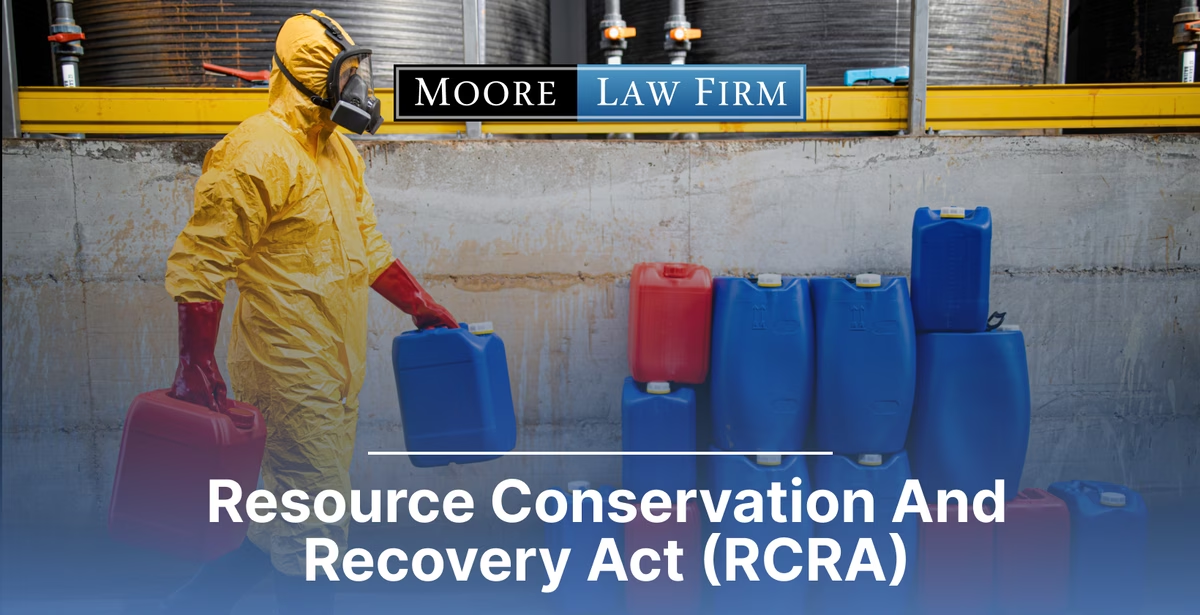
The Resource Conservation and Recovery Act (RCRA) is the primary federal law governing the management of hazardous and non-hazardous solid waste in the United States. RCRA regulates waste from the point of generation through transportation, treatment, storage, and final disposal. Its coverage includes cradle-to-grave tracking systems, enforceable waste management standards, federal and state enforcement authority, and broad environmental protection measures designed to safeguard public health and the natural environment.
What is the Resource Conservation and Recovery Act (RCRA)?
The Resource Conservation and Recovery Act (RCRA) is a comprehensive federal statute that defines the RCRA meaning as a regulatory framework governing the generation, transportation, treatment, storage, and disposal of solid and hazardous waste across the United States. RCRA’s scope encompasses hazardous waste, non-hazardous solid waste, and municipal solid waste. Regulated entities include industrial facilities, waste generators, transporters, treatment and storage operators, and disposal facilities. The law authorizes the Environmental Protection Agency to set national standards while allowing states to administer their own authorized programs.
Which Wastes are Classified as Hazardous Under RCRA?
RCRA classifies waste as hazardous based on specific physical and chemical characteristics or by listing it on federally designated waste lists.
1. Ignitable Waste
Ignitable waste catches fire easily under standard conditions. It includes flammable liquids, solids, compressed gases, and oxidizers. Common examples are paint solvents, waste oils, and alcohol-based industrial cleaning compounds that present serious fire and explosion risks during storage or transport.
2. Corrosive Waste
Corrosive waste destroys living tissue or degrades containers through chemical reactions. It includes strong acids and bases with a pH below 2 or above 12.5. Battery acid, industrial cleaning solutions, and electroplating liquids are common examples that damage storage vessels and contaminate surrounding environments.
3. Reactive Waste
Reactive waste is chemically unstable and reacts violently under normal conditions. It may explode, generate toxic gases, or ignite when exposed to water or heat. Examples include cyanide compounds, explosive residues, and certain metal-containing industrial byproducts that require specialized containment and handling.
4. Toxic Waste
Toxic waste contains harmful concentrations of heavy metals, pesticides, or organic compounds that leach into soil and groundwater. Examples include waste containing lead, mercury, arsenic, and benzene. Improper disposal of toxic waste causes severe environmental contamination and long-term public health consequences.
Does RCRA Apply to All Types of Waste?
No. RCRA does not apply to all types of waste. Domestic sewage, irrigation return flows, nuclear material regulated under the Atomic Energy Act, and certain mining wastes are excluded from RCRA jurisdiction. Household hazardous waste also receives conditional exemptions. RCRA’s regulatory authority focuses specifically on solid waste and hazardous waste as defined by the statute and EPA regulations.
Why was the Resource Conservation and Recovery Act Created?
The Resource Conservation and Recovery Act was created to address the catastrophic inadequacies of earlier federal waste policy. The Solid Waste Disposal Act of 1965 established minimal guidelines but provided no enforceable standards for hazardous waste. By the early 1970s, unregulated industrial dumping was contaminating water supplies, degrading soil, and threatening public health across the country. Congress recognized that voluntary compliance had failed and that environmental property damage caused by industrial waste demanded a legally enforceable, cradle-to-grave accountability system. RCRA responded by establishing national standards covering every stage of waste management, from generation through final disposal, with the explicit goal of preventing pollution before it occurred rather than remedying contamination after the damage was done.
When was the RCRA Passed?
The RCRA was passed in 1976, signed into law by President Gerald Ford on October 21 of that year. Congress subsequently strengthened the statute through the Hazardous and Solid Waste Amendments (HSWA) of 1984. HSWA expanded regulatory authority, imposed stricter land disposal restrictions, established new requirements for underground storage tanks, and directed the EPA to address previously unregulated categories of hazardous waste with greater urgency and specificity.
Who Enforces the Resource Conservation and Recovery Act?
The Resource Conservation and Recovery Act is primarily enforced by the Environmental Protection Agency (EPA) at the federal level. The EPA sets national standards, conducts inspections, issues compliance orders, and pursues civil and criminal enforcement actions against violators. States may apply for EPA authorization to administer their own RCRA programs in place of the federal program. Once authorized, state agencies assume primary enforcement responsibility within their borders, operating under EPA oversight to ensure standards meet or exceed federal requirements. The EPA retains authority to take enforcement action when states fail to act.
Which Federal Agencies Implement the RCRA?
The EPA is the lead federal agency implementing the RCRA, responsible for promulgating regulations, granting state program authorizations, and overseeing national compliance. The EPA’s Office of Resource Conservation and Recovery manages day-to-day program administration. State environmental agencies collaborate directly with the EPA to implement authorized programs, conduct facility inspections, issue permits, and enforce standards locally. This cooperative federalism structure allows tailored enforcement while maintaining consistent national minimum standards across all jurisdictions.
What are the Challenges in Implementing RCRA?
Implementing RCRA presents significant operational, financial, and jurisdictional obstacles that regulated industries and enforcement agencies must continuously address.
1. Compliance Costs Compliance costs burden manufacturers, chemical producers, and energy companies with substantial expenses for waste tracking systems, storage infrastructure, and regulatory reporting. Smaller generators often struggle to absorb these costs, creating competitive disparities and increasing the risk of non-compliance among resource-limited facilities.
2. Technical Tracking Challenges Technical challenges in hazardous waste tracking and disposal complicate consistent RCRA implementation. Accurately characterizing waste streams, maintaining manifest documentation, and verifying proper disposal at receiving facilities requires specialized knowledge that many generators and transporters lack without dedicated compliance staff or external consulting support.
3. Jurisdictional Overlaps Jurisdictional overlaps between federal EPA authority and state-authorized programs create enforcement complexities when waste crosses state lines or when state standards differ from federal baselines. Disputes over regulatory jurisdiction can delay enforcement, create compliance uncertainty for multi-state generators, and allow some violations to fall between federal and state authority.
What are the Main Objectives of RCRA?
The main objectives of RCRA establish a protective and accountable national framework for managing waste at every stage of its lifecycle.
1. Protect Human Health and the Environment Protecting human health and the environment is RCRA’s foundational objective. The law targets contamination of drinking water, soil degradation, and air pollution caused by improper waste disposal, establishing enforceable standards that reduce exposure risks for surrounding communities and ecosystems.
2. Manage Hazardous and Non-Hazardous Waste Safely Managing hazardous and non-hazardous waste safely requires regulated storage, treatment, transportation, and disposal standards applicable to all waste categories. RCRA mandates facility permits, operational requirements, and closure procedures that prevent accidental releases throughout the waste management lifecycle.
3. Promote Resource Conservation and Recovery Promoting resource conservation and recovery drives RCRA’s waste minimization programs, which prioritize reducing waste generation at the source, recovering usable materials through recycling, and extracting energy value from waste streams before resorting to land disposal.
4. Ensure Cradle-to-Grave Accountability Ensuring cradle-to-grave accountability means tracking hazardous waste from the moment it is generated through every transfer, treatment, and disposal step. This unbroken chain of documentation assigns legal responsibility at each stage and deters illegal dumping by creating a verifiable record of every waste movement.
What are the Major Provisions of RCRA that Fulfill these Objectives?
The major provisions of RCRA fulfill its objectives through four distinct regulatory frameworks that address different waste categories and environmental risks.
1. Subtitle C: Hazardous Waste Management Subtitle C establishes the comprehensive regulatory system for hazardous waste, covering identification, generation standards, transporter requirements, and treatment, storage, and disposal facility permits. It creates the manifest tracking system and sets the cradle-to-grave accountability structure that defines RCRA’s most rigorous enforcement tier.
2. Subtitle D: Non-Hazardous Solid Waste Management Subtitle D governs non-hazardous solid waste, including municipal solid waste landfills, by setting minimum national criteria for siting, design, operation, and closure. It encourages states to develop comprehensive solid waste management plans and promotes environmentally sound disposal practices for the vast majority of generated waste.
3. Subtitle I: Underground Storage Tank Regulation Subtitle I regulates underground storage tanks containing petroleum and hazardous substances, requiring leak detection systems, corrosion protection, spill and overfill prevention, and corrective action programs. These requirements address a major source of soil and groundwater contamination affecting communities across the country.
4. Cradle-to-Grave Tracking Requirements Cradle-to-grave tracking requirements mandate that hazardous waste generators initiate a uniform hazardous waste manifest that accompanies every shipment through transportation and treatment to final disposal. This documentation chain ensures accountability, enables regulatory audits, and creates legal liability for any party that diverts waste from its approved disposal pathway.
Does RCRA Require Environmental Impact Assessments like NEPA?
No. RCRA does not require environmental impact assessments in the same manner as the National Environmental Policy Act (NEPA) . NEPA mandates federal agencies to assess environmental consequences before approving major federal actions. RCRA instead establishes ongoing operational standards and permitting requirements for waste management facilities. While RCRA permits may trigger NEPA review when a federal action is involved, RCRA itself does not independently mandate environmental impact statements.
How Does RCRA Address Toxic Substances Regulated Under TSCA?
RCRA addresses toxic substances regulated under the Toxic Substances Control Act (TSCA) by governing what happens to those substances once they become waste. TSCA restricts the manufacture, use, and distribution of hazardous chemicals, while RCRA regulates their disposal. The EPA oversees both statutes, creating an enforcement overlap for toxic industrial materials such as polychlorinated biphenyls (PCBs). When chemical use regulated by TSCA generates hazardous waste, RCRA standards apply to its storage, transport, and disposal, ensuring toxic materials are handled safely through every stage of their end-of-life management.
How Does RCRA Handle Electronic Waste (E-Waste)?
RCRA handles electronic waste by classifying certain e-waste streams as hazardous based on toxic constituent concentrations including lead, mercury, cadmium, and beryllium. Cathode ray tubes, for example, are subject to specific EPA management standards. States have enacted supplementary e-waste regulations requiring manufacturer take-back programs and certified recycler requirements. Federal and state regulations together create a tiered framework for safe e-waste collection, processing, and disposal that prevents toxic electronic components from contaminating landfills and groundwater supplies.
How Does RCRA Promote Recycling and Resource Conservation?
RCRA promotes recycling and resource conservation by establishing waste minimization as a regulatory priority and encouraging facilities to reduce hazardous waste generation at the source. The statute supports programs that recover reusable materials, divert waste from landfills, and extract energy from non-recyclable waste streams. EPA guidance incentivizes generators to adopt cleaner production processes, use recyclable materials, and partner with certified recyclers, reducing both environmental impact and long-term disposal liability across regulated industries.
How Does RCRA Support Clean Water Protection?
RCRA supports clean water protection by ensuring hazardous waste is contained, treated, and disposed of in ways that prevent leachate from reaching groundwater and surface water. Properly lined landfills, regulated storage facilities, and manifest-tracked disposal directly reduce contamination pathways that threaten drinking water sources. The Clean Water Act and RCRA share EPA enforcement authority, creating coordinated oversight that addresses both the discharge of pollutants into waterways and the land-based disposal practices that generate those pollutants. Together, these statutes form an interlocking framework for comprehensive water quality protection.
Who is Responsible for Hazardous Waste Under RCRA?
Responsibility for hazardous waste under RCRA is assigned to every party in the disposal chain through cradle-to-grave liability. Generators bear primary responsibility for properly identifying, labeling, storing, and initiating manifest documentation for their waste. Transporters assume liability for waste in their custody during shipment. Treatment, storage, and disposal facilities bear responsibility for safe final management. Each party’s legal obligations attach at the moment they take custody of the waste and persist through any subsequent environmental harm caused by improper handling or disposal.
Which Industries are Most Affected by RCRA Regulations?
The industries most affected by RCRA regulations generate the highest volumes of listed and characteristic hazardous waste requiring strict management.
1. Manufacturing
Manufacturing facilities generate solvent waste, metal-bearing residues, and process byproducts classified as hazardous under RCRA. Compliance requires proper waste characterization, manifest documentation, approved storage, and disposal through licensed treatment or incineration facilities with full tracking accountability.
2. Chemical Production
Chemical production operations generate some of the most acutely hazardous waste streams regulated under RCRA. Reactant residues, off-specification products, and contaminated equipment require stringent management under Subtitle C, including permitted storage, trained personnel, and emergency response planning for chemical release scenarios.
3. Pharmaceutical
Pharmaceutical manufacturers generate hazardous pharmaceutical waste including unused drugs, contaminated materials, and chemical synthesis byproducts. RCRA’s pharmaceutical waste rules, updated in 2019, established specific management standards for healthcare facilities and manufacturers, including requirements for reverse distribution and incineration of certain drug categories.
4. Energy
Energy sector operations, including petroleum refining and power generation, produce listed hazardous wastes and large volumes of coal combustion residuals. RCRA Subtitle D governs coal ash disposal in impoundments and landfills, while Subtitle C applies to listed refinery wastes, requiring permitted disposal and groundwater monitoring at storage sites.
What are the Main Requirements Under RCRA for Waste Generators?
The main requirements under RCRA for waste generators establish a structured compliance framework from identification through disposal.
1. Waste Identification and Classification
Waste identification and classification requires generators to determine whether their waste meets RCRA hazardous definitions through testing or knowledge of the waste’s composition. Accurate classification determines which regulatory tier applies and what management standards must be followed throughout the waste’s lifecycle.
2. Proper Storage, Labeling, and Containment
Proper storage, labeling, and containment standards require generators to use approved containers, apply required labels identifying contents and accumulation start dates, and store waste in compatible, structurally sound vessels. Storage time limits apply based on generator size, with large quantity generators limited to 90 days of on-site accumulation.
3. Transportation Compliance
Transportation compliance requires generators to use a uniform hazardous waste manifest, select EPA-authorized transporters, and ensure waste reaches only licensed disposal facilities. Generators retain legal responsibility for their waste during transport and must confirm delivery through manifest return copies from receiving facilities.
4. Recordkeeping and Reporting Requirements
Recordkeeping and reporting requirements obligate generators to maintain manifest copies, biennial reports, waste analysis records, and exception reports for unconfirmed deliveries. These records must be retained for at least three years and made available to EPA or state inspectors upon request to demonstrate regulatory compliance.
How is Hazardous Waste Transported and Tracked Under RCRA?
Hazardous waste is transported and tracked under RCRA through the uniform hazardous waste manifest system, a multi-copy paper or electronic document that accompanies every regulated shipment. Generators initiate the manifest, transporters sign and retain copies at each transfer point, and receiving facilities confirm delivery by returning signed copies to the generator. Discrepancies between shipment and delivery quantities trigger mandatory exception reports to state environmental agencies, creating an auditable record that deters illegal diversion and documents chain of custody at every stage.
Why is Cradle-to-Grave Tracking Important?
Cradle-to-grave tracking is important because it creates unbroken legal accountability for hazardous waste from generation through final disposal, ensuring no party can transfer custody without documentation. This system prevents illegal dumping by making diversion traceable and prosecutable. It supports environmental protection goals by identifying contamination sources when releases occur and enabling rapid regulatory response. Without cradle-to-grave documentation, hazardous waste can disappear into unregulated disposal channels, resulting in long-term soil, groundwater, and public health damage that is difficult and costly to remediate.
What are the Penalties for Non-Compliance With RCRA?
Non-compliance with RCRA exposes generators, transporters, and facility operators to severe civil and criminal penalties that escalate with the severity and willfulness of the violation.
1. Civil Penalties
Civil penalties for improper handling are authorized under RCRA §3008(a) and reach up to $70,117 per day per violation, subject to annual inflation adjustment under the Federal Civil Penalties Inflation Adjustment Act. Regulators assess civil penalties against facilities that store waste without permits, fail to maintain manifests, violate container standards, or miss reporting deadlines, with penalty amounts reflecting violation duration, harm potential, and compliance history.
2. Criminal Penalties
Criminal penalties apply to individuals and entities that knowingly violate RCRA standards. Convictions for knowing endangerment, where violations place another person in imminent danger, carry fines up to $250,000 and imprisonment up to 15 years for individuals, with organizational fines reaching $1,000,000 per violation.
3. Recordkeeping and Reporting Fines
Fines for recordkeeping and reporting failures penalize generators and facilities that fail to submit biennial reports, maintain required manifests, or file exception reports for unconfirmed waste deliveries. These administrative violations accumulate daily and demonstrate a pattern of non-compliance that regulators consider in calculating total penalty assessments.
It is wise to hire a lawyer for A property damage claim when RCRA violations cause contamination that damages your property, ensuring your rights and compensation are fully protected.
What are the Penalties for Violating Hazardous Waste Transportation Rules Under RCRA?
Transportation violations under RCRA carry distinct penalties that parallel enforcement authority under related federal law.
1. Civil and Criminal Penalties Civil and criminal penalties for transportation violations include daily civil fines and criminal prosecution for knowingly transporting hazardous waste to unpermitted facilities. Criminal convictions can result in imprisonment, substantial organizational fines, and personal liability for corporate officers who authorize or direct unlawful transportation activities.
2. Fines for Improper Labeling or Shipping Fines for improper labeling or shipping apply when transporters fail to display required placards, use non-compliant containers, or ship waste without a completed manifest. The Hazardous Materials Transportation Act supplements RCRA by imposing additional DOT penalties for labeling, packaging, and routing violations during hazardous waste transit.
3. Facility or Transporter Shutdowns Facility or transporter shutdowns occur in severe cases where ongoing violations present imminent hazards to human health or the environment. The EPA may seek emergency injunctive relief requiring immediate cessation of operations, permit revocation, and mandatory corrective action before any resumption of waste handling activities is permitted.
How is RCRA Measured and Monitored Over Time?
RCRA is measured and monitored over time through a combination of mandatory reporting, facility inspections, and data-driven compliance tracking. Generators submit biennial reports documenting waste quantities, types, and disposal methods, which the EPA compiles into national waste trend databases. State and federal inspectors conduct scheduled and unannounced facility inspections to verify compliance with storage, labeling, and operational standards. Technological innovation, including electronic manifest systems and real-time monitoring tools, enhances data accuracy and supports continuous improvement in waste reduction and recycling performance across regulated industries.
What are the Environmental Benefits of RCRA?
The environmental benefits of RCRA are substantial and measurable, reflecting decades of enforced waste management standards that have reduced contamination and promoted sustainability.
1. Reduced Environmental Contamination Reduced environmental contamination results from RCRA’s prohibition on open dumping, land disposal restrictions, and liner requirements for hazardous waste facilities, preventing toxic leachate from reaching drinking water sources and ecologically sensitive areas across the country.
2. Improved Waste Management and Recycling Improved waste management and recycling outcomes follow from RCRA’s waste minimization mandates and recycling incentive programs, which have diverted millions of tons of hazardous and solid waste from landfills annually, extending disposal capacity and reducing long-term environmental liability.
3. Promotion of Sustainable Resource Use Promotion of sustainable resource use is advanced through RCRA’s encouragement of industrial recycling, material recovery, and energy extraction from waste streams, reducing demand for virgin raw materials and lowering the environmental footprint of manufacturing and energy production industries nationwide.
4. Enhanced Public Health Protection Enhanced public health protection results from RCRA’s strict standards for hazardous waste storage, treatment, and disposal near residential communities, reducing toxic exposure risks and decreasing the incidence of contamination-related illnesses in populations living adjacent to regulated waste management facilities.
How Does RCRA Promote Waste Reduction and Resource Conservation?
RCRA promotes waste reduction and resource conservation by legally mandating waste minimization as a condition of generator compliance. Regulated facilities must certify on biennial reports that they have implemented programs to reduce waste volume and toxicity. The EPA supports these programs through technical assistance, regulatory incentives for recycling and material recovery, and guidance on cleaner production methods. By prioritizing reduction and reuse before disposal, RCRA encourages industries to adopt sustainable environmental practices that lower long-term waste generation and preserve natural resources across all regulated sectors.
How Does RCRA Prevent Improper Waste Disposal?
RCRA prevents improper waste disposal through rigorous enforcement of cradle-to-grave standards that assign legal accountability at every waste management stage. Permitted treatment, storage, and disposal facilities must meet strict design, operational, and closure requirements before accepting regulated waste. The EPA and authorized state agencies conduct facility inspections, audit manifest records, and pursue enforcement actions against violators. Technical assistance programs educate generators on compliant disposal options, reducing inadvertent violations while deterring intentional illegal dumping through the credible threat of substantial civil and criminal penalties.
Share this article:
Related Articles

Hazardous Materials Transportation Act

Clean Water Act (CWA)